
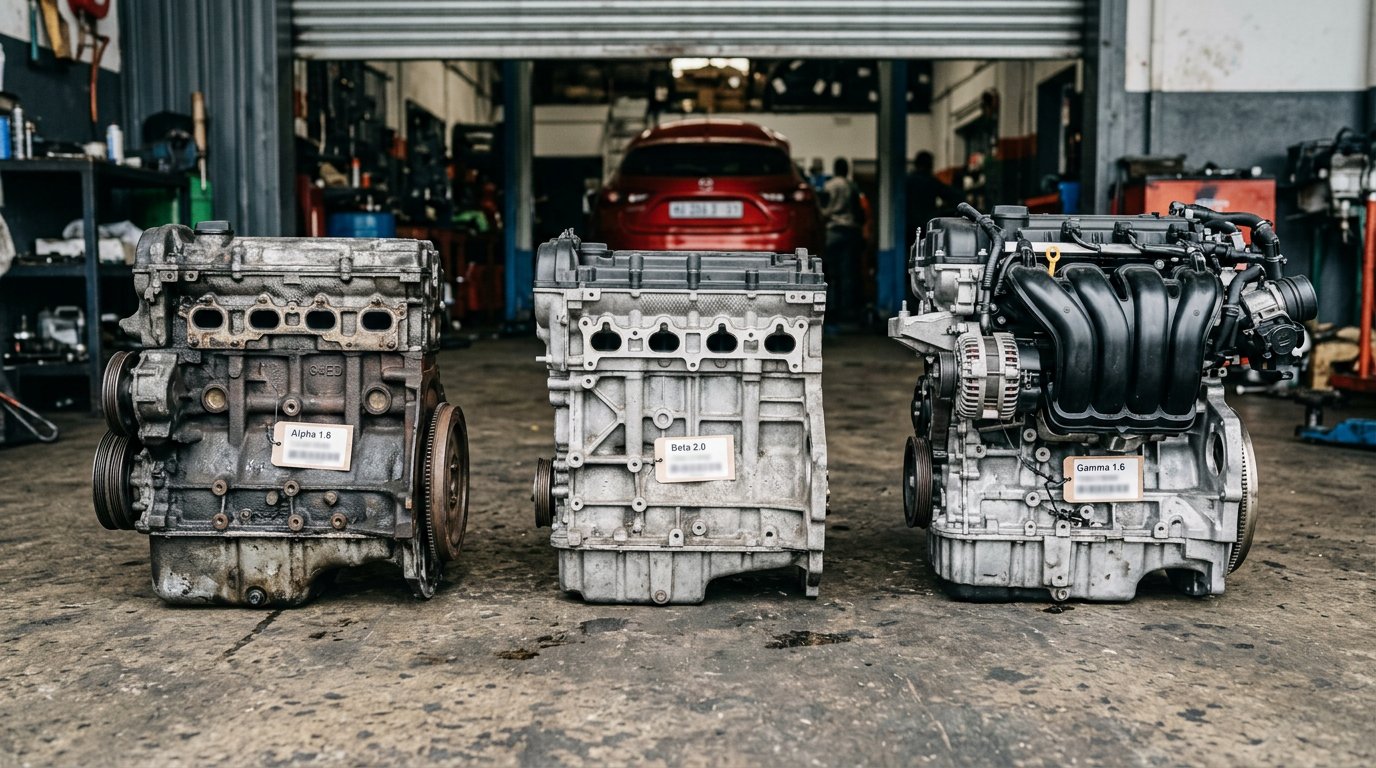
Hyundai Elantra Engine Families Explained
Short answer: a 2000-2010 Hyundai Elantra (XD or HD) ran the Alpha or Beta engine families. A 2010-2020 Elantra (MD, AD) ran the Gamma 1.6 or Nu 2.0. A 2020+ Elantra (CN7) uses the newer Smartstream engines. They are all called "Elantra", but underneath they are four different engineering eras with different rebuild costs, parts availability, and known failures.
Key Takeaways
- Hyundai Elantra has shipped with four engine families across SA generations
- Alpha (1.5-1.8, 1995-2010): iron block, simple, cheap to fix, plentiful parts
- Beta (1.8-2.0, 1995-2010): aluminium head on iron block, balance-shaft variants, watch for oil burn
- Gamma (1.4-1.6, 2007-2020+): chain-driven, MPI mostly, the most reliable Elantra engine option
- Nu (1.8-2.0, 2010-2020): aluminium block, GDI on later variants, carbon-induced issues at 120 000+ km
- Identify yours via the engine code stamped near the bellhousing flange
How To Identify Your Elantra's Engine
Hyundai stamps the engine code on a machined boss near the bellhousing flange — usually visible from the top of the engine bay if you clean the area. The first letter tells you the family:
- G4 = petrol engine
- G6 = V6 petrol
- D3 / D4 = diesel
The next two letters indicate the family:
| Code prefix | Family | Capacity range |
|---|---|---|
| G4E (G4ED, G4EC, G4EH) | Alpha | 1.3-1.6 |
| G4G (G4GB, G4GC, G4GR) | Beta | 1.6-2.0 |
| G4F (G4FA, G4FC, G4FG) | Gamma | 1.4-1.6 |
| G4N (G4NA, G4NB, G4NC) | Nu | 1.8-2.4 |
| G4FJ, G4FD, G4FP | T-GDI / Smartstream | 1.4-1.6 turbo |
If you can't see the stamp, the VIN's tenth and eleventh characters (or the build-year tag inside the door jamb) will narrow it down.
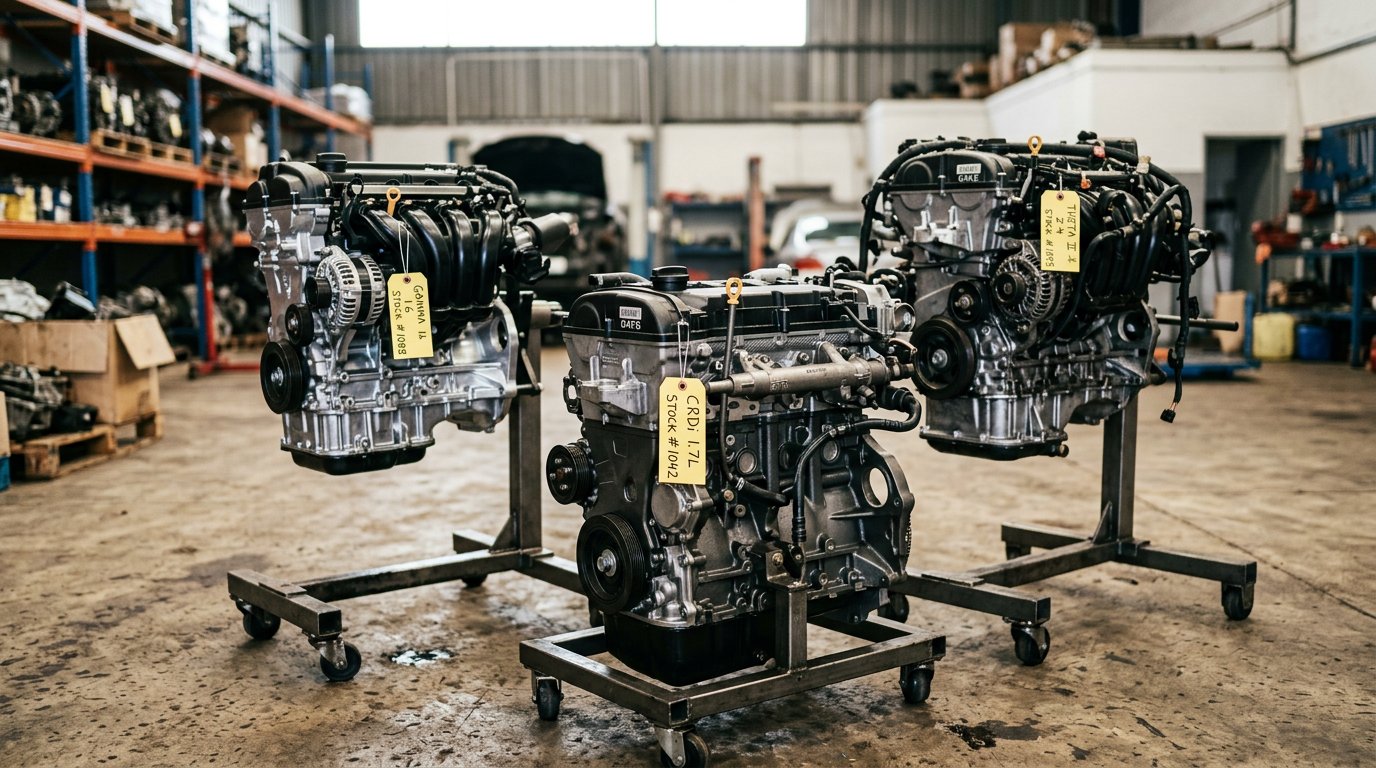
Elantra Engines — All Families
Ask us for a quote on a used engine for your Elantra generation — from the Alpha 1.6 in XD-era Elantras through to Gamma 1.6 and Nu 2.0 long blocks. Quote your engine code.
Alpha Engine Family (1995-2010)
Fitted to the XD-generation Elantra (2000-2006) in 1.6 (G4ED) and 1.8 (G4GB — technically a Beta-Alpha crossover) variants. Earlier J2 / Avante models used the smaller G4EK 1.5.
The technical bit:
- Iron block, aluminium SOHC head (some DOHC variants)
- Multi-port fuel injection — no GDI
- Belt-driven camshaft (60 000 km service interval)
- 79-101 kW depending on variant
- Production: Hyundai Asan, Korea
Common failures:
- Crankshaft position sensor — bench-test before condemning the ECU
- Cam pulley bolt working loose at 200 000+ km (rare but catastrophic)
- Valve cover gasket leak at the spark-plug wells
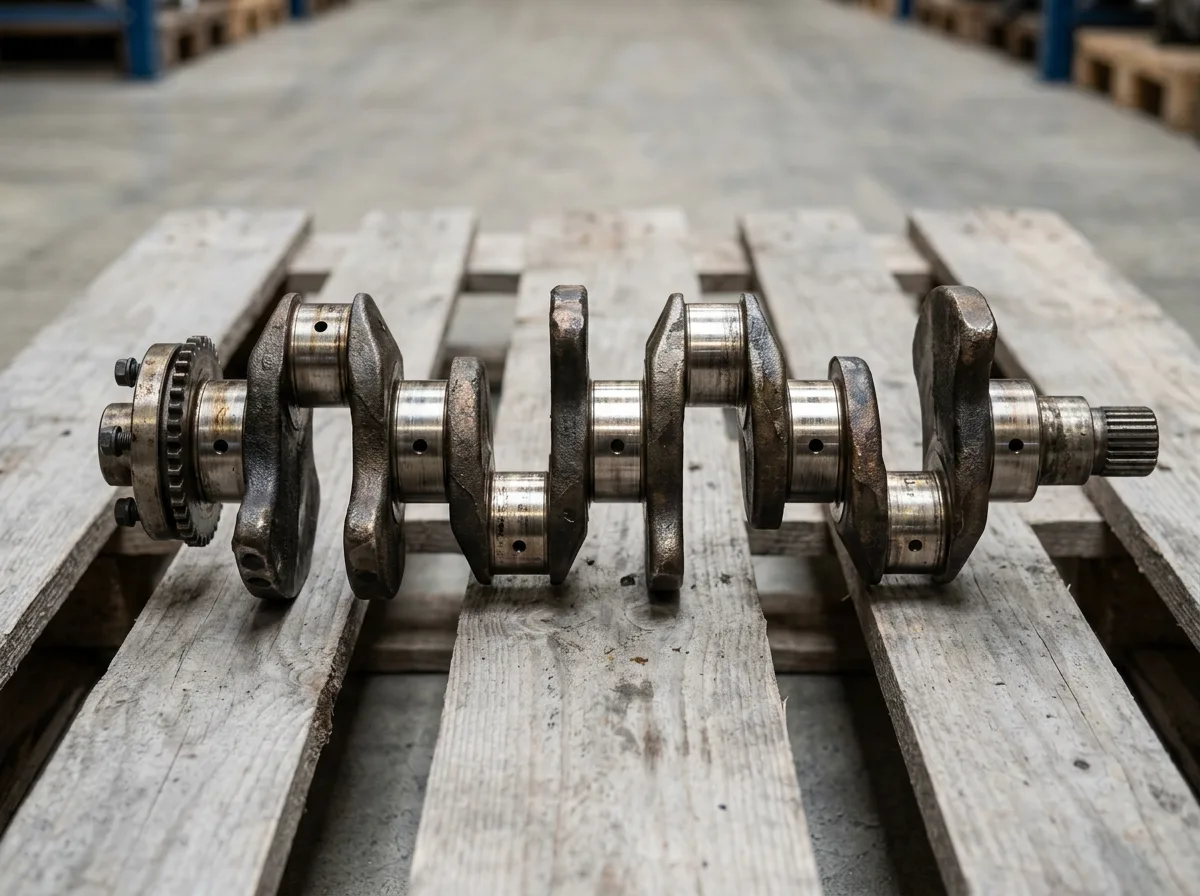
Verdict: a forgiving, simple engine. If you have a XD with the G4ED 1.6 in honest condition and the cambelt is changed on time, keep running it. Parts are cheap and widely available. The same Alpha 1.6 powers the budget Getz hatch, where the only thing that really catches owners out is a neglected belt — our guide to common Hyundai Getz problems covers what to budget for.
Beta Engine Family (1995-2010)
Fitted to the XD Elantra 2.0 (G4GC) and the HD Elantra 2.0 (G4GC) early production. Also seen in Tucson JM, Tiburon GK and the older Sonata EF.
The technical bit:
- Iron block, aluminium DOHC head (16-valve, 4-valves per cylinder)
- Multi-port fuel injection
- Belt-driven cam
- 102-105 kW in the 2.0
- Optional balance shaft on some variants (smoothness)
Common failures:
- Cracked exhaust manifolds (cast-iron version on early production)
- Oil consumption from worn valve stem seals at 180 000+ km
- VVT solenoid (later 2.0s) sticking and causing rough idle hot
- Coil-on-plug failure on individual cylinders — P0301-P0304
Verdict: solid engine with no nasty surprises. Parts availability is decent but not as cheap as Alpha-family parts. The G4GC 2.0 is the unsung hero of the early-2000s Hyundai range.
Gamma Engine Family (2007-2020+)
Fitted to the MD-generation Elantra (2010-2015), the AD-generation (2015-2020) in 1.6 MPI variants, and earlier as the 1.6 in i30 FD/GD, Accent RB and i20 GB.
The technical bit:
- Aluminium DOHC head
- 16-valve, dual variable valve timing (DVVT)
- Chain-driven cam (no scheduled big-spend service!)
- Multi-port injection on most SA variants (GDI on a few late ones)
- 92-99 kW in the 1.6
Common failures:
- VVT solenoid failure — rough hot idle, P0011 / P0014 codes
- Timing chain stretch beyond 250 000 km — listen for cold-start rattle
- Carbon build-up on the GDI variants (rare in SA spec; mostly MPI here)
- Coil pack failure on individual cylinders
Verdict: the best long-term Elantra engine. Chain-driven cam removes the 60 000 km timing-belt service item, and aftermarket support is strong. If you are buying a used Elantra to drive for 200 000 km more, look for an MD-generation with the G4FC Gamma 1.6 MPI.
Nu Engine Family (2010-2020)
Fitted to the MD-generation Elantra 1.8 (G4NB) and the AD-generation 2.0 (G4NA). Also in Elantra Sport variants (G4FJ T-GDI, but that's technically a Gamma turbo) and the related Tucson TL 2.0 petrol.
The technical bit:
- Aluminium block AND head — lighter than Beta
- 16-valve DOHC, dual VVT
- Chain-driven cam
- MPI on early units, GDI on later
- 109-130 kW depending on variant
Common failures:
- GDI carbon build-up on intake valves — rough idle, misfires, requires an intake-valve clean (walnut blasting)
- Oil consumption on some 2.0 G4NA units — similar to Theta II pattern but less severe
- Plastic intake manifold cracking around the runners
- Hot-start judder from worn variable valve timing actuators
Verdict: modern and refined, but the GDI carbon issue means a 250 000 km Nu needs an intake clean at least once. Slightly more expensive to keep on the road than a Gamma but better fuel economy and smoother power delivery.
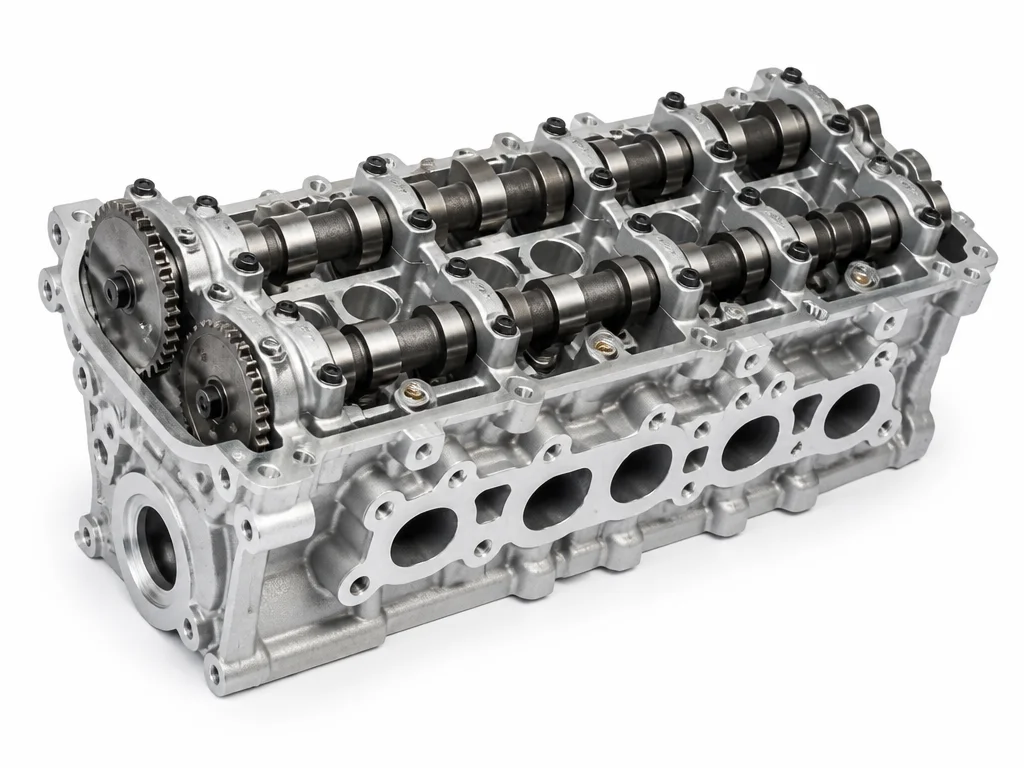
Cylinder Heads And Top-End Parts
When the bottom end is healthy but the head is tired, a replacement cylinder head can save the engine. Ask us for a quote for your Alpha, Beta, Gamma or Nu engine code.
Quick Comparison Table
| Feature | Alpha | Beta | Gamma | Nu |
|---|---|---|---|---|
| Head | Alu SOHC/DOHC | Alu DOHC | Alu DOHC | Alu DOHC |
| Cam drive | Belt | Belt | Chain | Chain |
| Service interval (timing) | 60 000 km belt | 60 000 km belt | None (chain) | None (chain) |
| Fuel system | MPI | MPI | MPI / GDI late | MPI / GDI |
| Headline weakness | None major | Valve stem seals | VVT solenoid | GDI carbon |
| Verdict | Cheap to keep | Solid | Best long-term | Modern but more upkeep |
Which One Should You Buy?
Buying a used Elantra in 2026?
- Cheapest to run: XD-generation with G4ED 1.6 Alpha — simple, cheap parts
- Best balance of modern + reliable: MD-generation with G4FC 1.6 Gamma MPI — chain cam, no major weak spot
- If you want a 2.0: HD-generation with G4GC Beta 2.0 — proven, repairable, mid-priced
- If fuel economy matters most: AD-generation with G4NA 2.0 Nu MPI — but budget an intake-clean every 80 000 km if it's a GDI variant
For the wider context — what to check on any used Hyundai engine purchase — see our best used Hyundai engines for SA roads guide, and browse our Hyundai engines for sale catalogue and ask for a quote on your Alpha, Beta, Gamma or Nu engine. If the bottom end is healthy but the top end has failed, see our Hyundai cylinder heads for sale.