
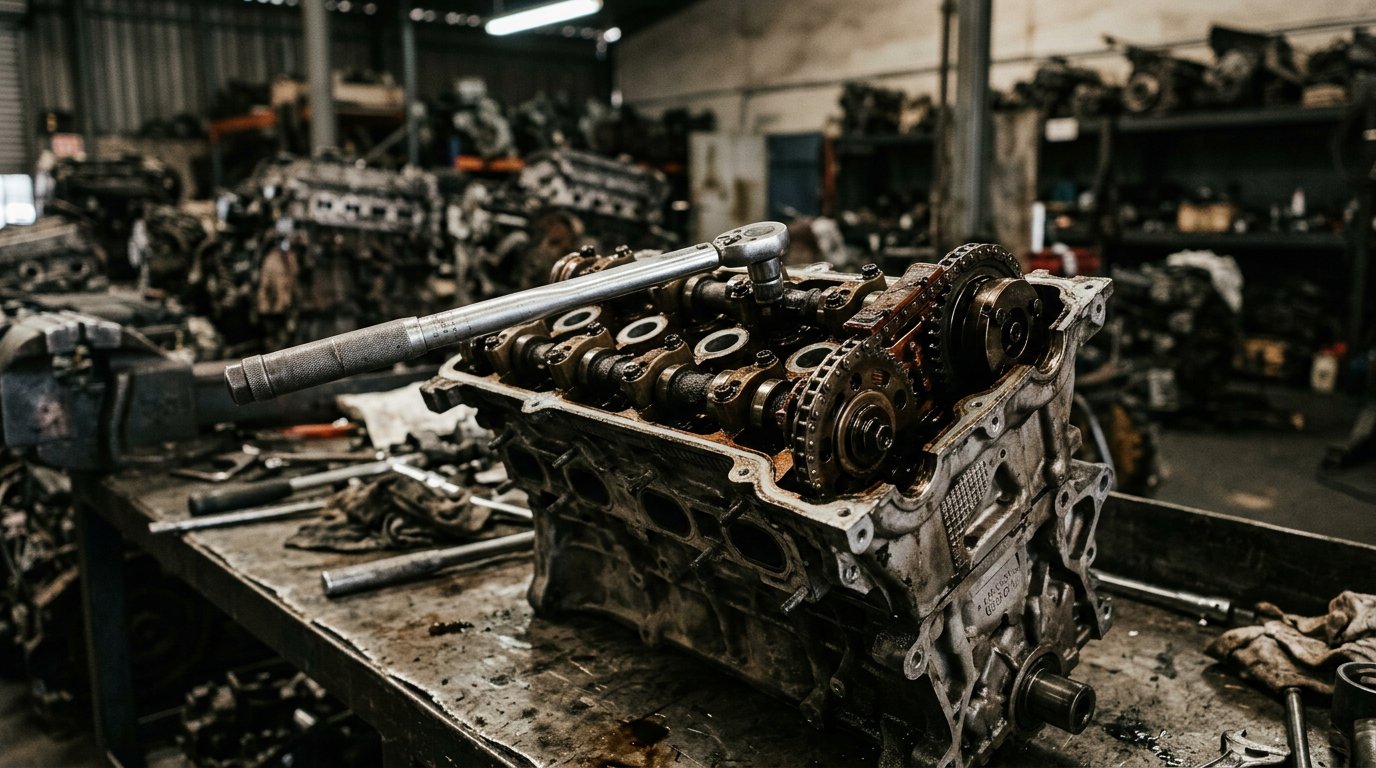
Hyundai Tucson Theta II 2.0 Engine Faults
The short answer first: the Theta II 2.0 (G4KD) petrol engine fitted to the 2010-2015 Hyundai Tucson LM and ix35 LM in South Africa has three recurring faults — connecting-rod bearing failure (the cause of the global engine-knock recall), oil consumption from worn piston rings on higher-mileage units, and a tendency to load up with carbon on the intake side because of GDI fuel mapping in later variants. Replacement-engine prices vary widely by supplier, condition and mileage, so ask for a quote on your exact engine code.
Key Takeaways
- The Theta II 2.0 (G4KD) shipped in the LM-generation Tucson and ix35 (2010-2015) here in SA
- Connecting-rod bearing wear is the headline issue — it triggered Hyundai's US recall campaigns on Sonata and Santa Fe Sport GDI engines (the Tucson and ix35 were not listed in either)
- Typical fault symptoms: rod knock at idle, low oil pressure light, sudden stalling, P0335 / P1326 codes
- Used, reconditioned and new replacement engines are priced very differently; get quotes on all three before deciding
- Diagnose before you replace — a knocking sound from the head can be cam follower wear, not a rod
- Engine swaps are usually faster and cheaper than a bottom-end rebuild in SA's labour market
What Engine Are We Actually Talking About?
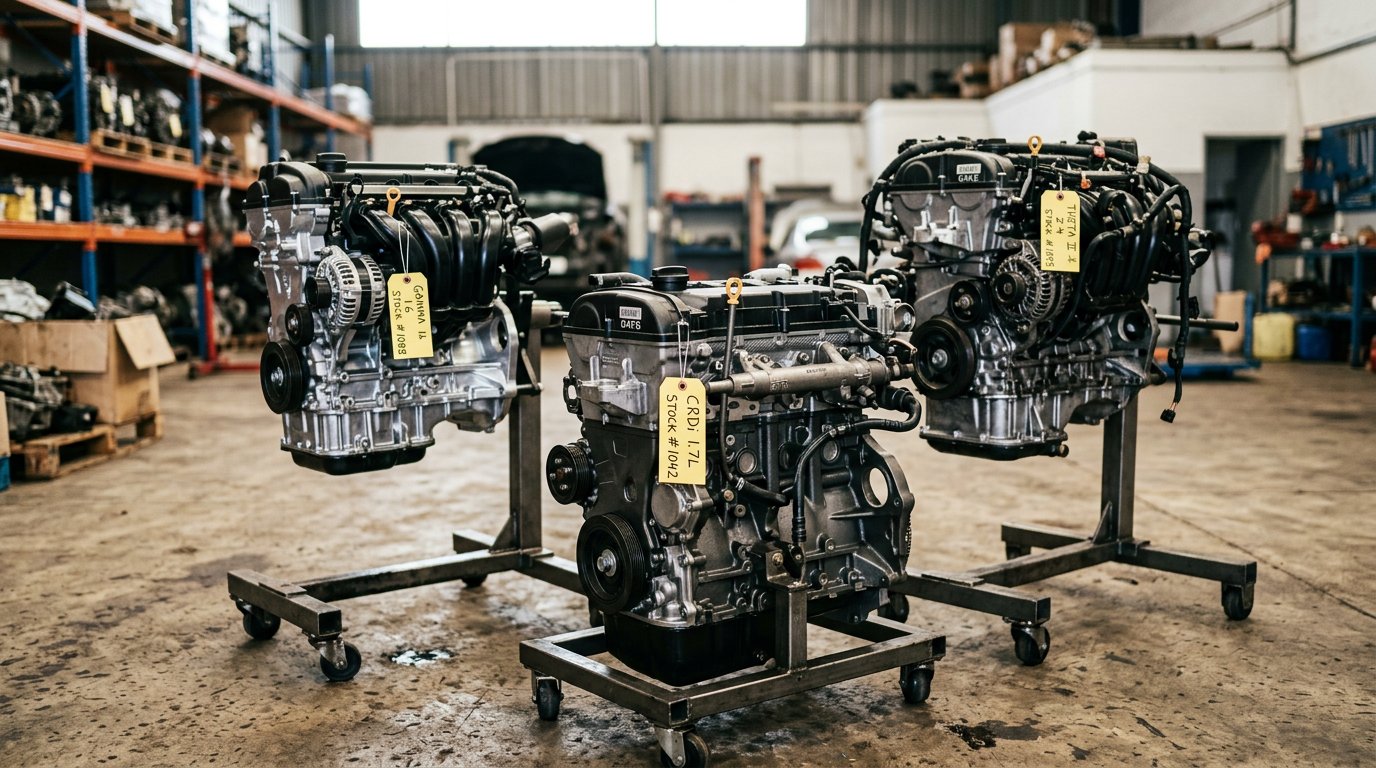
The Theta II is Hyundai's second-generation 2.0L and 2.4L inline-four petrol family. In SA the relevant variants are the G4KD 2.0 (155 kW in turbo form, 121-124 kW naturally aspirated) and the G4KE / G4KJ 2.4. The Tucson LM and ix35 LM both used the G4KD naturally aspirated 2.0 as the petrol option alongside the D4HA 2.0 CRDi diesel.
You can tell which engine you have at a glance — the petrol Theta II has a plastic intake plenum on top, a black coil-on-plug ignition setup, and the engine code stamped near the bellhousing flange.
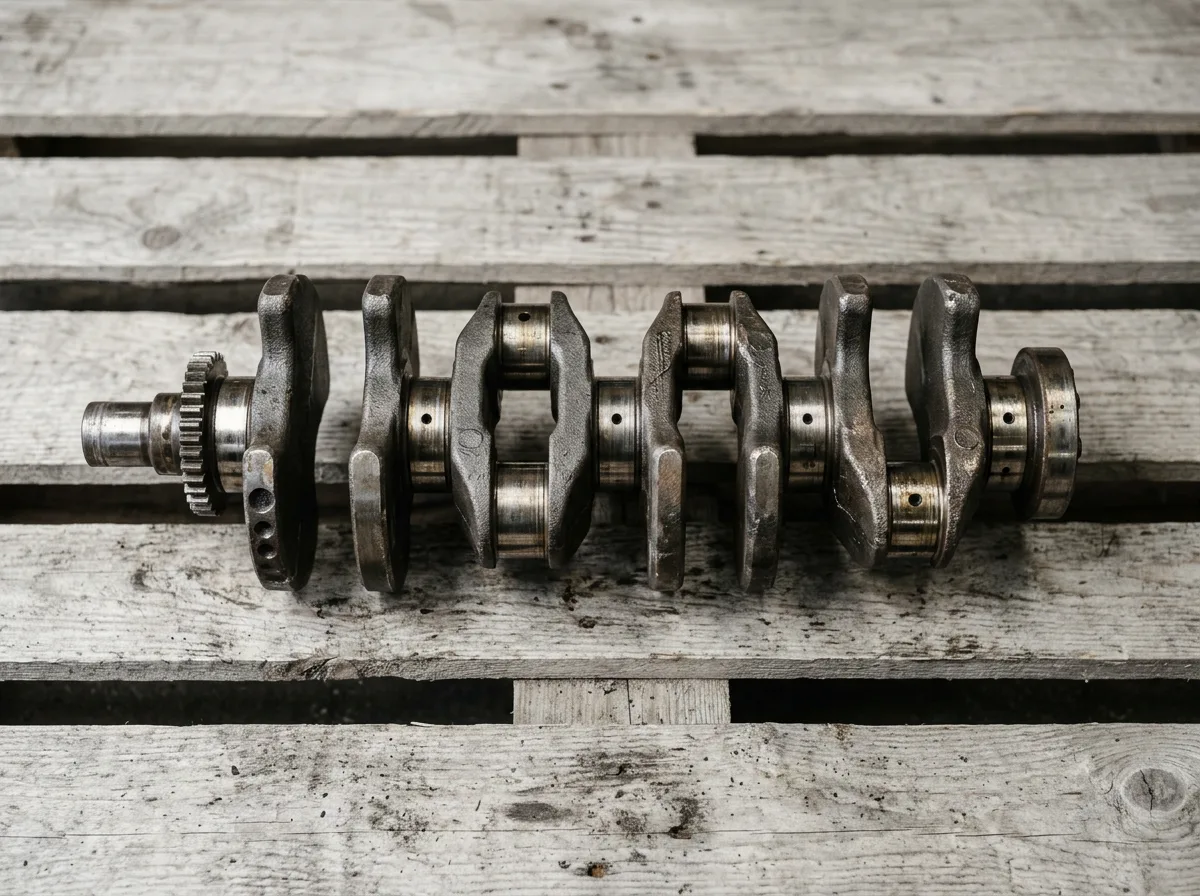
Used Theta II 2.0 Petrol Engines
If your Tucson LM or ix35 is knocking and the diagnosis points to the bottom end, a used G4KD long block is often the most economical fix. Ask us for the donor mileage and what the engine comes with when you request a quote.
What Goes Wrong — The Three Big Faults
1. Connecting-rod bearing failure (the recall issue)
This is the one that put Theta II engines in the news. In the US, Hyundai issued recall 15V-568 (2015, covering 2011-2012 Sonata with the 2.0 or 2.4 GDI engine) and 17V-226 (2017, covering 2013-2014 Sonata and Santa Fe Sport) for engine bearings that could wear prematurely, causing a knock that can lead to a stall. Neither campaign lists the Tucson or ix35, and both are US campaigns, so ask a Hyundai dealer to check your VIN for any open campaign in South Africa.
Typical symptoms of bottom-end bearing wear:
- A low-frequency knock at idle that quickens with revs
- Low oil pressure warning light (often after a hot soak)
- Slight metallic glitter in the engine oil when you check the dipstick
- DTCs like P0335 (crankshaft position sensor — secondary code from the ECU misreading a rod-bearing-induced vibration) or P1326 (the dedicated knock-sensor-detection-system code used by Hyundai's KSDS firmware update)
If you hear the knock and see metal in the oil, the rod bearings have already started to spall. Continuing to drive will lock the engine.
2. Excessive oil consumption from worn piston rings
Higher-mileage Theta II units — typically over 150 000 km — can develop oil consumption of 1 litre per 1 000 km or worse.
It typically shows up as blue smoke on cold start that clears, no obvious oil leaks, and constant top-ups between services.
3. Carbon build-up on the GDI variants
The later GDI-fuelled Theta II variants suffer the same fate as every direct-injection petrol — no fuel washing over the intake valves means carbon builds up. Symptoms: rough idle, misfires, P0301-P0304 codes. The usual fix is an intake-valve cleaning (walnut blasting) at a workshop.
Cost To Fix In South Africa
| Option | Price Range (R) | Best For |
|---|---|---|
| Bottom-end overhaul (in-frame) | R28 000 - R42 000 | Solid car, low body km |
| Used engine (drop-in) | Ask for a quote | Older car, budget rebuild |
| Reconditioned long block | Ask for a quote | Lower-mileage daily |
| New OE Hyundai engine | R110 000 - R145 000 | Newer car still under finance |
| Fitting labour only | R8 000 - R14 000 | Add to any engine option |
Indicative ranges only, not quotes; prices vary by condition, mileage, supplier and labour rate. Reconditioned prices vary widely — always check what's included (head reco, new rings, bearings, gaskets, oil pump?) and get any warranty terms in writing.
Diagnose Before You Spend
Plenty of "rod knock" Tucson complaints turn out to be cheaper failures. Before you commit to engine replacement, check:
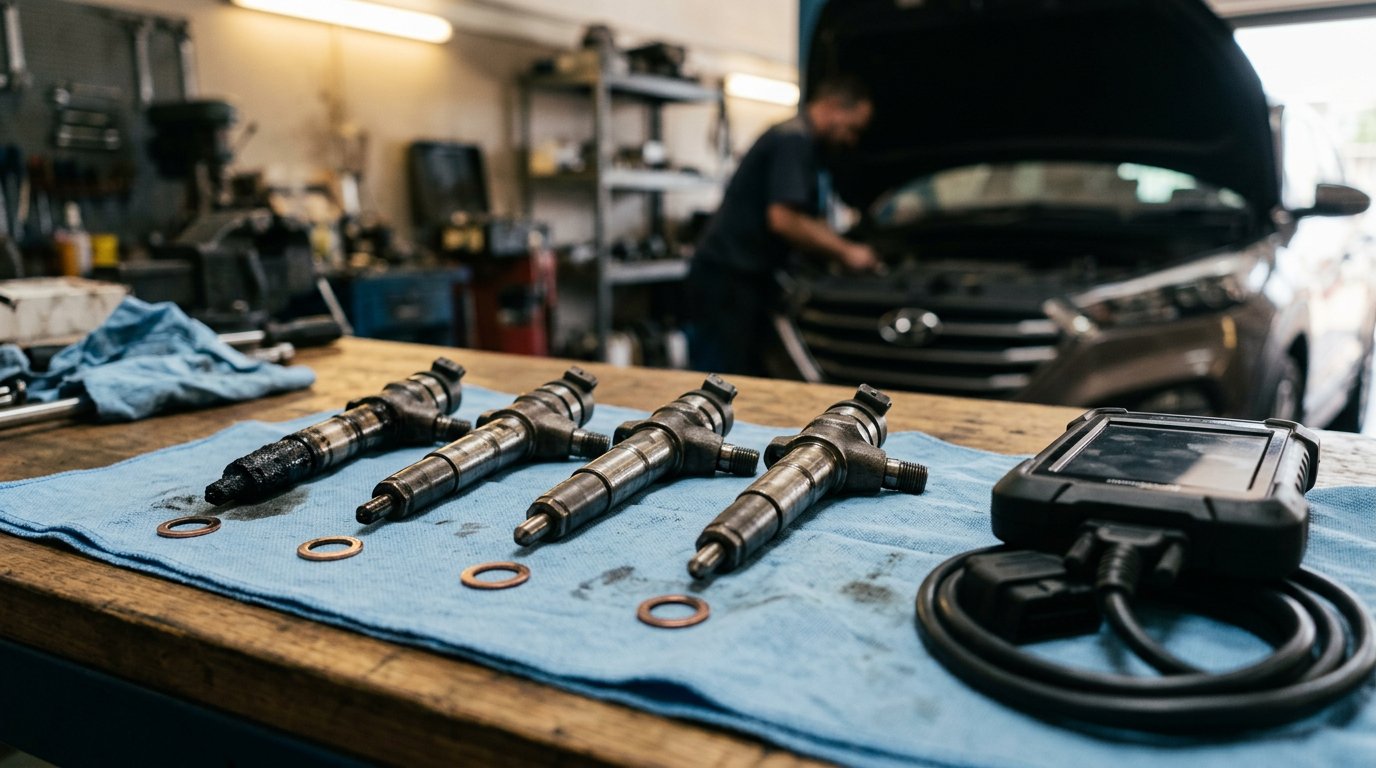
- Cam follower wear — the G4KD uses bucket-style mechanical lifters. Worn followers tap from the head, not the block. Pull the rocker cover and inspect.
- Carbon-induced cold-start knock — sometimes resolves after a Seafoam-style intake clean.
- Wrong oil viscosity — Theta II wants 5W-30 ACEA A5/B5. Heavier oil masks the noise temporarily and damages bearings faster.
- Knock-sensor false reading — the KSDS firmware update can trigger P1326 without a real rod knock. Get the latest software flashed at a Hyundai dealer first.
Repair Vs Replace — How To Decide
In SA's labour market, a full bottom-end rebuild on a Theta II runs about R28 000-R42 000 with new rings, bearings and machining. A clean used engine usually gets the car back on the road faster than a rebuild — browse our Hyundai Tucson engines for sale and ask for a quote.
If your Tucson has 220 000 km on the clock and the body is honest, the used-engine route often makes more sense — by the time you've rebuilt the bottom end, the auto box, suspension and electrics will need attention anyway. If only the top end has failed (snapped cambelt, warped deck, burnt valves) and the bottom end is clean, a Theta II cylinder head replacement is the more economical path.
For a higher-spec Tucson or one still on finance, a reconditioned long block makes sense — new rings and bearings, and a written warranty from the rebuilder.
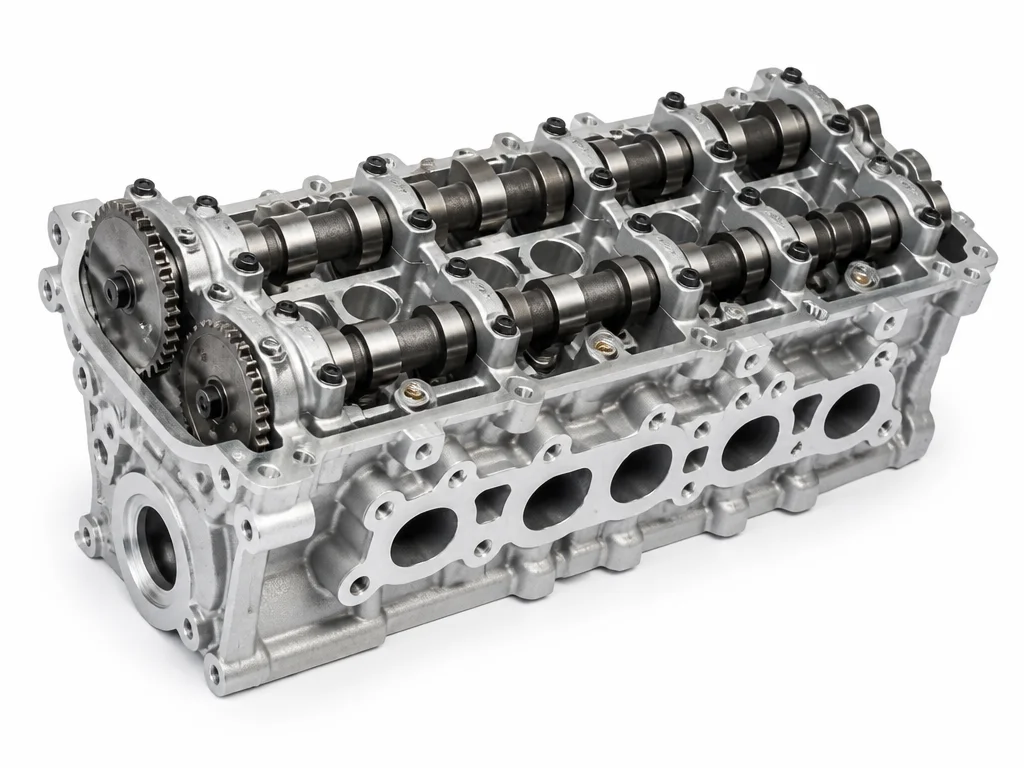
Theta II Cylinder Heads
If the bottom end is sound but the head is cracked between valve seats, a refurbished head with re-cut seats and new valve stem seals saves the engine without a full swap.
Labour Costs In SA
Independent specialists in Gauteng charge R450-R650/hr for engine work; Hyundai dealers run R900-R1 200/hr. An engine swap on a Tucson LM takes a competent independent about 10-14 hours including bench-prep on the used unit, gearbox reseal, new clutch (if manual), and a full fluid service. Budget R8 000-R14 000 in labour on top of the engine itself.
FAQ
See the FAQ section below the article — common questions about the Theta II covered in detail.
Sources
- NHTSA recall 15V-568 — 2011-2012 Hyundai Sonata, connecting-rod bearings (https://api.nhtsa.gov/recalls/campaignNumber?campaignNumber=15V568000)
- NHTSA recall 17V-226 — 2013-2014 Hyundai Sonata and Santa Fe Sport, engine bearing wear (https://api.nhtsa.gov/recalls/campaignNumber?campaignNumber=17V226000)