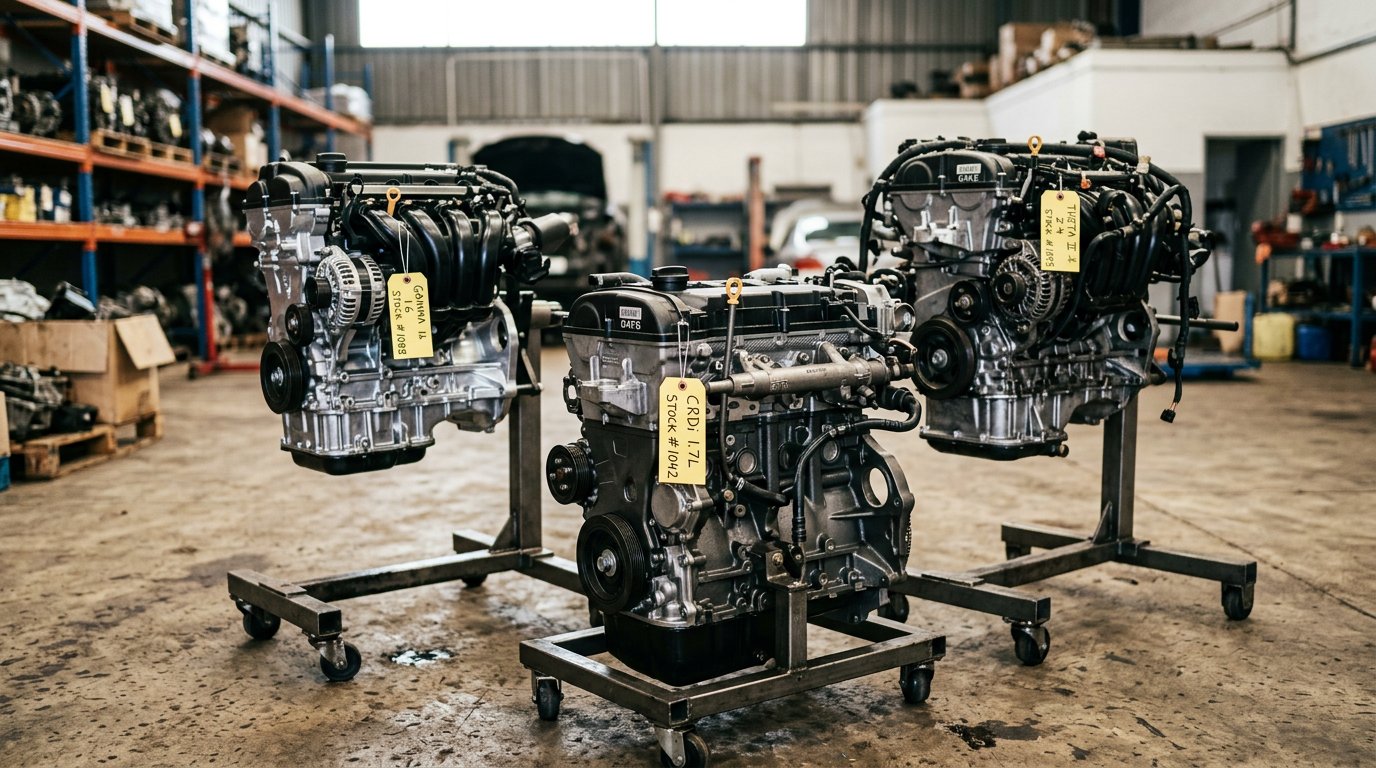

The short answer: it depends on the generation, and two i20 engines share a 1.4 badge while being different engines. We built this guide from Hyundai Automotive South Africa's own documents: its i20 spec page as archived in January 2011, the 2013 brochure, the spec sheets of April 2014, January 2015 and 2017, and the current 2026 brochure. Then we set it beside what i20 owners send us. Between 13 August and 21 November 2026, 20 of the i20 enquiries we logged quoted an engine code: G4FA six times, G4FC six times, G4LA five times, G4LC twice and one diesel code.
20
i20 enquiries that quoted an engine code, 13 Aug to 21 Nov 2026
Source: Hyundai Spares enquiry records
1 396 vs 1 368 cc
two different engines, both sold as the i20 1.4
Source: Hyundai SA spec sheets, 2014 and 2015
15 000 km
service interval in the current i20 brochure
Source: Hyundai SA i20 brochure, 2026
Key Takeaways
- The first i20 on Hyundai SA's 2011 spec page came as a 1.4 (1 396 cc) or a 1.6 (1 591 cc) petrol
- The facelifted first-generation car added a 1.25 Kappa petrol and a 1.4 U2 CRDi turbodiesel, so there was a diesel i20 here
- The second-generation i20 switched to Kappa 1.2 MPI (1 197 cc) and Kappa 1.4 MPI (1 368 cc) engines
- Today's i20 is sold with a 1.2, a 1.4 automatic and a 1.0 T-GDi on the N Line
- Every engine on Hyundai SA's 2014, 2015 and 2017 sheets is listed with a silent timing chain, not a cambelt
- Read the engine code off the block before you order an engine or engine parts
In this guide
Every i20 Engine Hyundai SA Has Listed
Hyundai SA's own documents give four line-ups. The table keeps each figure exactly as Hyundai printed it, and says "not stated" where the document for that car does not give a value.
| Generation (source) | Engine | Capacity | Power / torque | Gearbox | Cam drive | Oil | Engine code |
|---|---|---|---|---|---|---|---|
| First i20, early (Hyundai SA spec page archived Jan 2011) | 1.4 petrol | 1 396 cc | 74 kW / 136 Nm | 5-speed manual or 4-speed automatic | not stated | 3.3 L | G4FA (what owners quote) |
| 1.6 petrol | 1 591 cc | 91 kW / 156 Nm | 5-speed manual | not stated | 3.3 L | G4FC | |
| First i20, facelift (Hyundai SA 2013 brochure and April 2014 spec sheet) | 1.25 Kappa petrol | 1 248 cc | 64 kW / 120 Nm | 5-speed manual | Timing chain | 3.6 L | read it off the block |
| 1.4 Gamma petrol | 1 396 cc | 73 kW / 136 Nm | 6-speed manual or 4-speed automatic | Timing chain | 3.6 L | G4FA (what owners quote) | |
| 1.4 U2 CRDi turbodiesel | 1 396 cc | 66 kW / 220 Nm | 6-speed manual | Timing chain | 5.3 L | D4FC | |
| Second i20 (Hyundai SA spec sheets Jan 2015 and 2017) | Kappa 1.2 MPI | 1 197 cc | 61 kW / 115 Nm | 5-speed manual | Timing chain | 3.6 L | G4LA |
| Kappa 1.4 MPI | 1 368 cc | 74 kW / 133 Nm | 6-speed manual or 4-speed automatic | Timing chain | 3.6 L | read it off the block | |
| Kappa 1.4 MPI (1.4 Sport, 2017 sheet) | 1 368 cc | 85 kW / 160 Nm | 6-speed manual | Timing chain | 3.6 L | read it off the block | |
| Current i20 (Hyundai SA 2026 brochure) | 1.2 petrol | 1 197 cc | 61 kW / 114.7 Nm | 5-speed manual | not stated | not stated | read it off the block |
| 1.4 petrol | 1 368 cc | 73.3 kW / 133.4 Nm | 6-speed automatic | not stated | not stated | read it off the block | |
| 1.0 T-GDi (N Line only) | 998 cc | 89.5 kW / 171.6 Nm | 7-speed DCT | not stated | not stated | read it off the block |
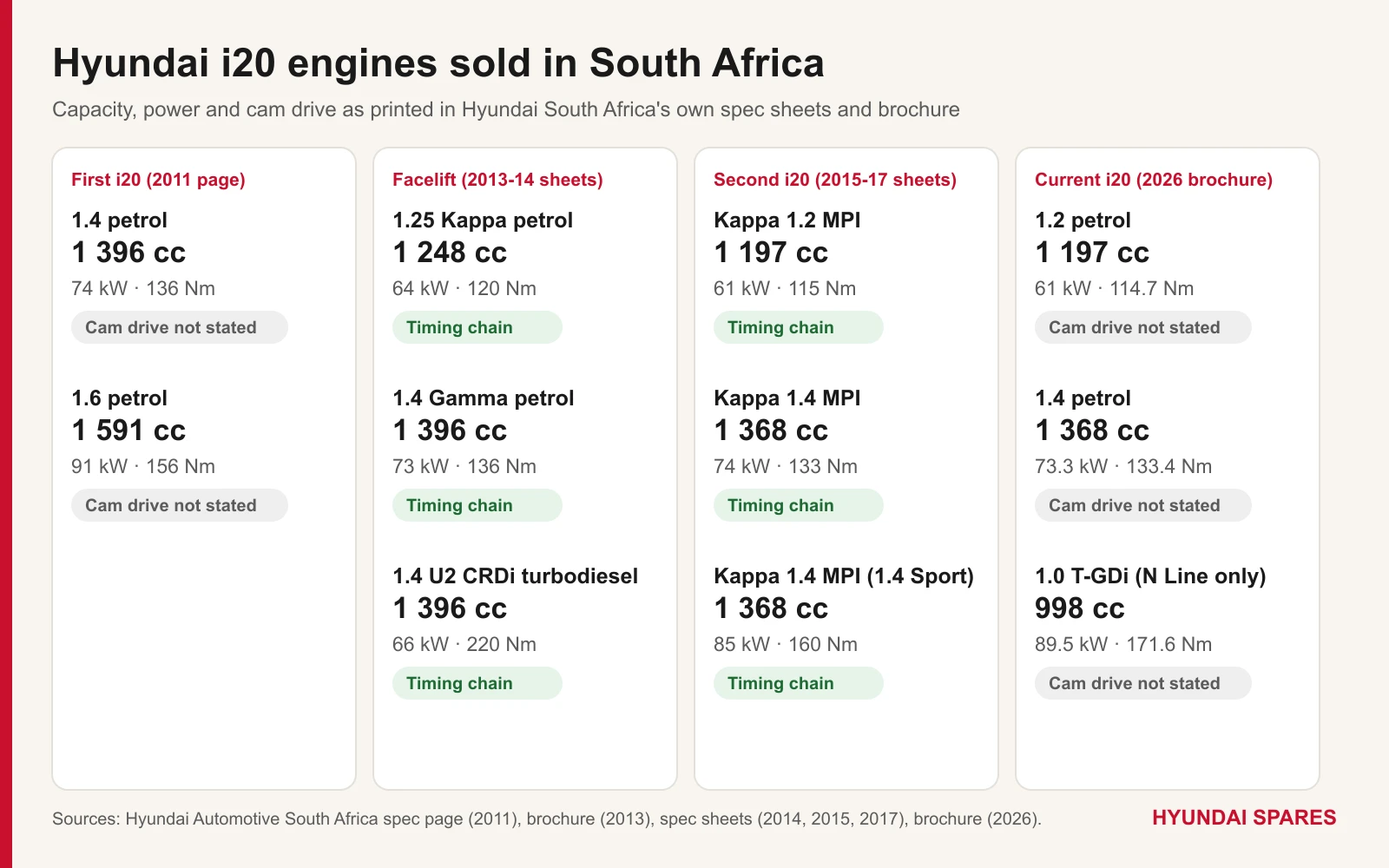
Oil follows the same pattern. Hyundai SA's 2011 page lists 3.3 litres for the 1.4 and the 1.6. The 2014 sheet lists 3.6 litres for the petrols and 5.3 litres for the diesel, and the 2015 and 2017 sheets list 3.6 litres for the Kappa engines. The 2026 brochure does not give a figure, so check the owner's manual for a current car.
The Two Different 1.4-Litre Engines
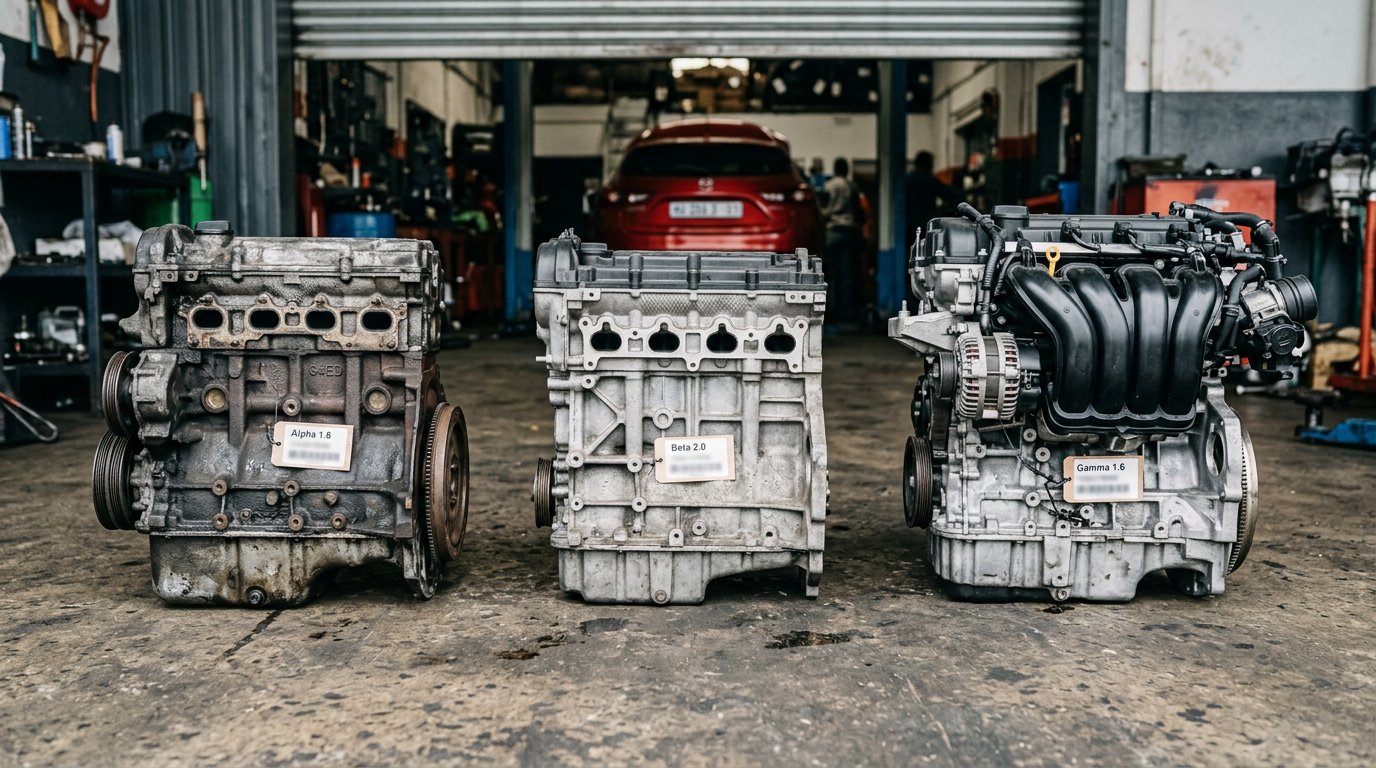
This is the trap when you buy a replacement engine or engine parts for an i20 1.4. Hyundai SA's 2013 brochure calls the facelifted first-generation engine the "1.4l Petrol Gamma", and its April 2014 sheet lists it at 1 396 cc with a 77 x 74.99 mm bore and stroke. The second-generation car's 1.4 is a different engine. Hyundai SA's January 2015 sheet calls it the Kappa 1.4 MPI, at 1 368 cc and 72.0 x 84.0 mm.
Common mistake: ordering by badge
"i20 1.4" describes two engine families with different bores, strokes and capacities. Pistons, rings, head gaskets and heads are made to fit the bore, and the bores differ (77 mm against 72 mm), so those parts from one will not suit the other. Give us the year and the engine code, not just the badge.
Gearboxes changed too. The facelifted first-generation 1.4 came with a 6-speed manual or a 4-speed automatic, and so did the second-generation Kappa 1.4. The current 1.4 is listed only with a 6-speed automatic, and the 1.0 T-GDi only with a 7-speed DCT on the N Line. If it is the gearbox you are replacing, our Hyundai gearboxes for sale page covers the units we can quote on.

Yes, There Was a Diesel i20
The facelifted first-generation i20 was sold here with a diesel. Hyundai SA's 2013 brochure describes a "turbocharged intercooled 1.4l U2 engine" with a 6-speed manual, 66 kW and 220 Nm, and the April 2014 sheet lists it as the i20 U1.4 CRDi Glide. Hyundai's own manuals call the U-II 1.4 diesel D4FC. Diesels are rare in what we see: only one of the 20 code-quoting enquiries above was for a diesel i20.
Good to know
Hyundai SA's 2014 sheet lists common rail direct injection for the diesel and multi-point injection for the petrols, so the diesel has injection parts the petrol i20s do not. If yours smokes, knocks or loses power, read our guide to CRDi injector failure symptoms before replacing anything bigger.
Timing Belt or Chain?
Chain, on every engine where Hyundai SA's sheets say. The April 2014 sheet lists a silent timing chain on all five variants it covers, including the U1.4 CRDi diesel. The January 2015 and 2017 sheets list a silent timing chain on every Kappa 1.2 and Kappa 1.4. Neither the 2011 spec page nor the 2026 brochure states the cam drive, so we do not claim one for those cars.
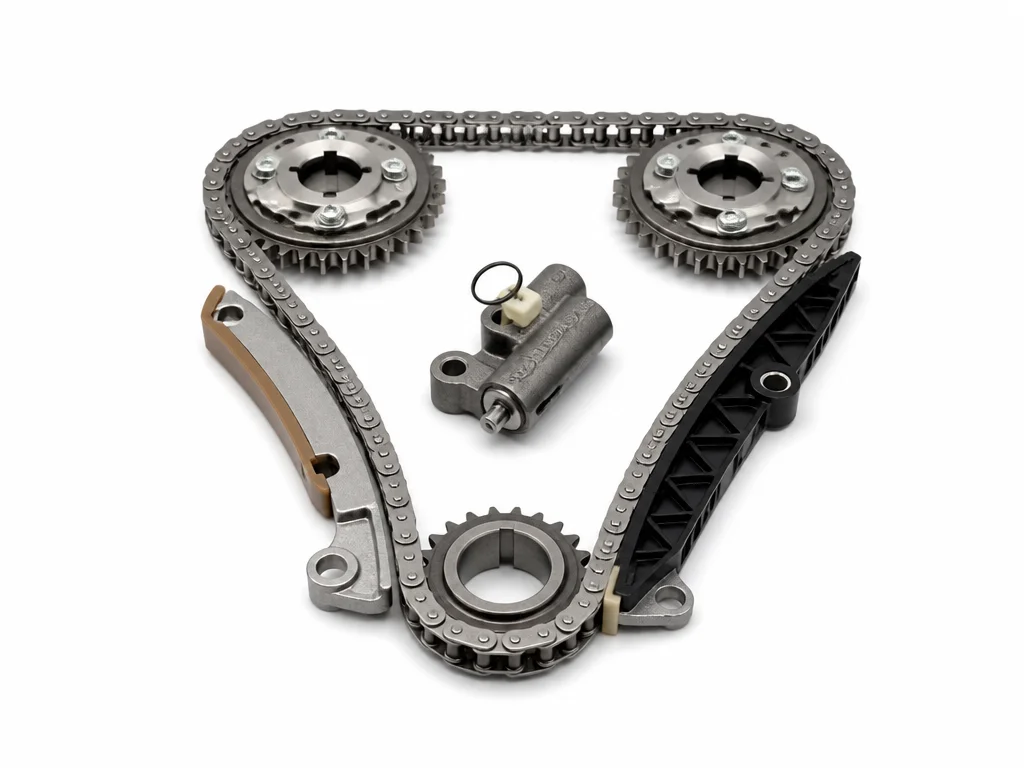
So there is no cambelt to budget for on these engines. The chain kit itself, with its guides and tensioner, is still a part you can replace. If yours rattles on a cold start, our i20 common problems guide covers what owners report and what it can mean.
Tip: keep to the service interval
Hyundai SA's current brochure gives a 15 000 km service interval, and its January 2015 spec sheet lists the same. Keep to it, and use the oil grade your owner's manual specifies.
How to Tell Which Engine You Have
Hyundai's i20 owner's manual says it plainly: "The engine number is stamped on the engine block". The engine code is the start of that number. When owners send us their engine number, it begins with the four-character code, for example G4FA or G4LA, followed by a serial.
Here is where each code in our enquiries comes from:
- G4FC: Hyundai's Creta owner's manual names it the "Gamma 1.6" petrol and gives a 77 x 85.44 mm bore and stroke. That matches the 1 591 cc i20 1.6 on Hyundai SA's 2011 page, and five of the six owners who quoted G4FC also wrote 1.6
- G4LA: Hyundai's i20 Active owner's manual uses it for the 1.2 petrol engine, and four of the five owners who quoted it also wrote 1.2
- G4FA: owners quote it for a 1.4 petrol. Two of the six wrote "1.4 petrol" with it, and one gave a 2012 car, which falls in the first-generation Gamma 1.4 years. We hold no Hyundai document that names it, so treat it as owner-reported
- G4LC: two owners quoted it without saying which engine it was on, so we have not matched it to a row in the table. If yours says G4LC, send it with your enquiry

Replacement Engines and Engine Parts
Send us the year, the engine code and, if you have it, the VIN. That is enough to match the right unit. We quote used and new Hyundai engines on our Hyundai engines for sale page, and heads separately on our cylinder heads page. For body, electrical and service parts, start at the Hyundai i20 spares page.
i20 engine
Complete or long block, matched to your engine code.

i20 cylinder head
Gamma and Kappa heads are not the same part.
Timing chain kit
Chain, guides and tensioner for i20 petrol engines.

i20 gearbox
Manual, automatic or DCT, matched to your engine.
Sources
- Hyundai Automotive South Africa, i20 specifications page, archived 1 January 2011 (https://web.archive.org/web/20110101030521/http://www.hyundai.co.za/Specifications.cfm?event=i20-Specifications&intCentralContentID=9660&VehicleName=i20&StockPageID=9658)
- Hyundai Automotive South Africa, i20 brochure, archived 14 May 2013 (https://web.archive.org/web/20130514062407/http://www.hyundai.co.za/docs/categories/431/i20%20Brochure.pdf)
- Hyundai Automotive South Africa, i20 specification sheet, April 2014 (https://web.archive.org/web/20140712201717/http://www.hyundai.co.za/docs/categories/431/201404-Hyundai-i20.pdf)
- Hyundai Automotive South Africa, New i20 specification sheet, January 2015 (https://web.archive.org/web/20150401182027/http://www.hyundai.co.za/docs/categories/19113/20150107-Hyundai-New-i20.pdf)
- Hyundai Automotive South Africa, i20 specification sheet, archived May 2017 (https://web.archive.org/web/20170518203632/http://www.hyundai.co.za/docs/32383/Hyundai_i20_SpecSheet.pdf)
- Hyundai South Africa, i20 brochure 2026 (https://cdn1.hyundai.co.za/images/vehicles/new-vehicles/model-brochure-pdf/hyundai-i20-brochure2026-a4-digital-update-web-1-db4538a01eff611e.pdf)
- Hyundai Motor India, Creta owner's manual, engine code legend and specifications (https://www.hyundai.com/content/dam/hyundai/in/en/data/connect-to-service/owners-manual/creta.pdf)
- Hyundai Motor India, i20 Active owner's manual, fuse panel legend (https://www.hyundai.com/content/dam/hyundai/in/en/data/connect-to-service/owners-manual/old/i20_Active.pdf)
- Hyundai, i20 owner's manual (UK edition), engine number (https://dmassets.hyundai.com/is/content/hyundaiautoever/i20+GBpdf)
- Hyundai Spares enquiry records, i20 enquiries 13 August to 21 November 2026 (counts only, no customer data)