
Hyundai H-1 Turbo Failure: Symptoms & Causes
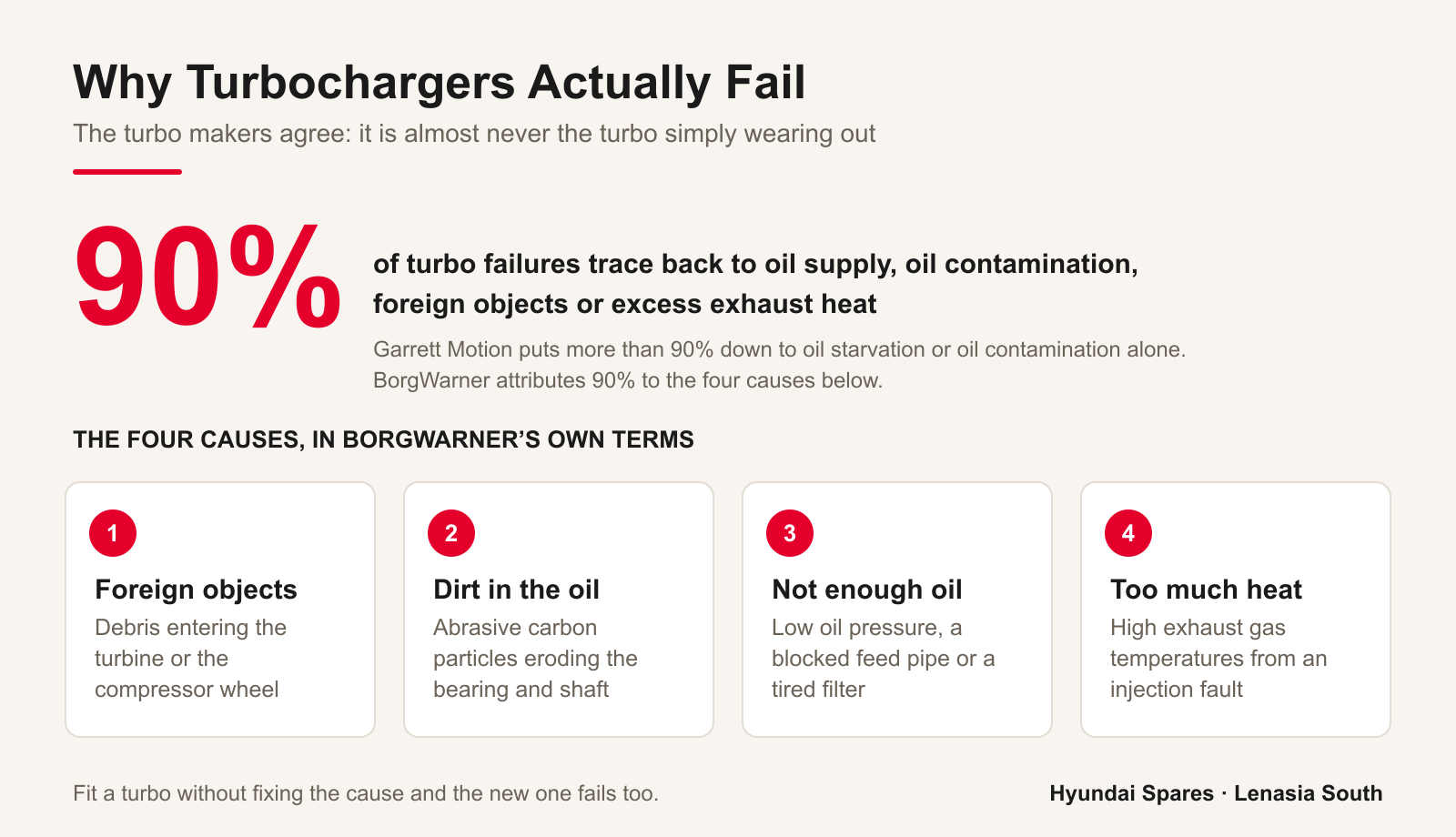
The short version: on a Hyundai H-1 2.5 VGTi, four symptoms are worth acting on — blue smoke, a whistle that rises with engine speed, a sudden flat spot under load, and a metallic rattle from the exhaust side. All four make the turbo the prime suspect. But the turbocharger is usually the casualty rather than the cause. Turbocharger manufacturer Garrett Motion states that more than 90% of turbocharger failures are oil-related, either oil starvation or oil contamination. BorgWarner puts the same figure on four causes: foreign objects, dirt in the oil, inadequate oil supply and high exhaust gas temperatures. Not one of those is the turbo simply wearing out. Fit a replacement without finding what killed the first one and you will end up buying two.
Key Takeaways
- South Africa's H-1 diesel is the 2.5 VGTi, rated at 125 kW and 441 Nm — and the VGT part means variable-geometry turbine, so the vane mechanism is part of the turbo itself
- Four symptoms are worth acting on: blue smoke, a rising whistle, a sudden loss of boost, and a metallic rattle
- Garrett attributes more than 90% of turbo failures to oil starvation or oil contamination; BorgWarner attributes 90% to foreign objects, dirty oil, inadequate oil supply and excess exhaust heat
- Several cheaper faults imitate a dying turbo — a blocked air filter, an injection fault or a damaged exhaust all produce lost power and smoke
- Since the May 2012 facelift the H-100 bakkie has been a 2.6-litre, 58 kW naturally aspirated diesel on a mechanical Bosch pump — no turbo to fail. Pre-2012 H-100s did run a 2.5 turbodiesel, so check the build year before ruling it out
- On this engine the commonest chain is leaking injector copper washers, which soot the oil, block the sump pick-up and starve the turbo — the turbo dies last, not first
- The H-1 was discontinued here in 2021 when the Staria replaced it, so every H-1 on SA roads is now a used vehicle earning its keep
- Replace the turbo and fix the cause in the same job — that is the whole lesson
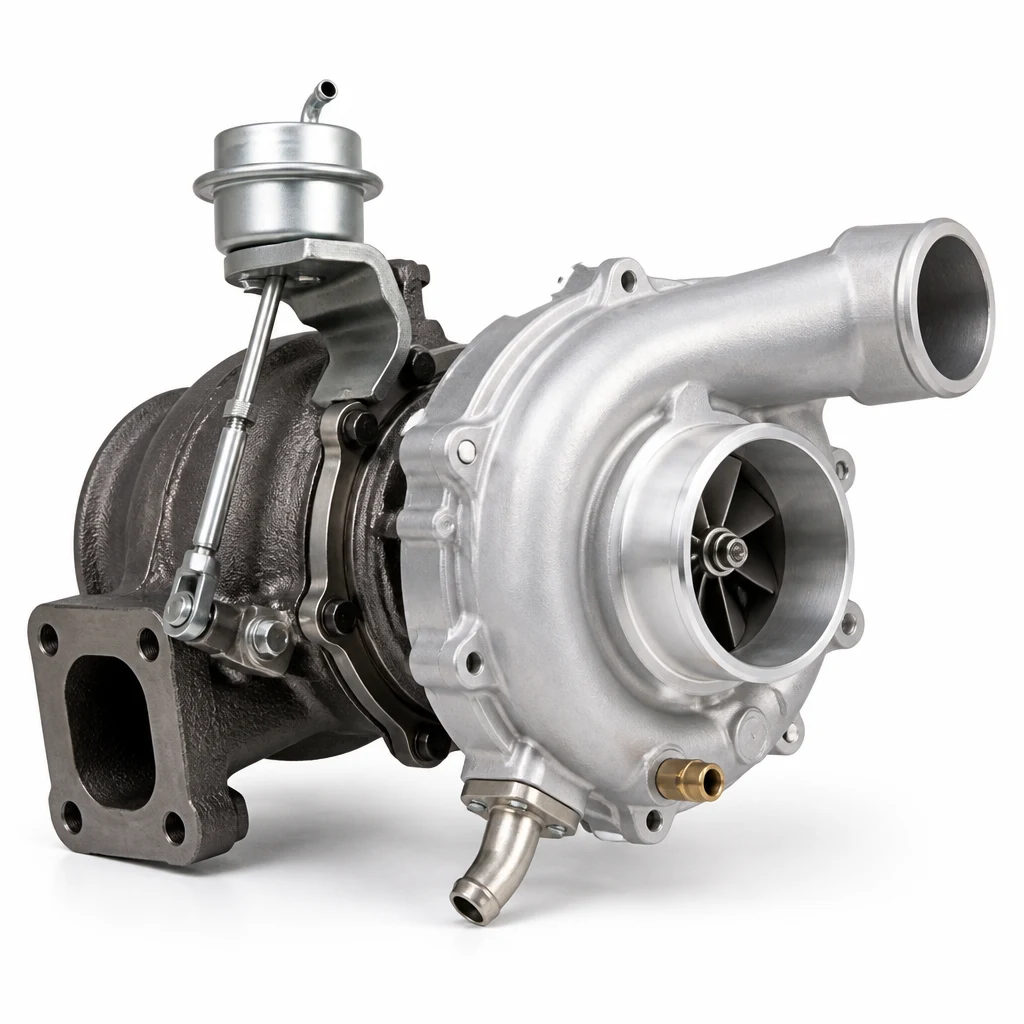
Used & Reconditioned Turbos
Ask us for a quote on a used turbo or a reconditioned core for the H-1 2.5 VGTi, and ask what was checked on it before it ships. Send us your year and VIN and we will match the right unit.
Which H-1 Are We Talking About?
South Africa got the H-1 in two flavours. The one almost everybody bought is the diesel, sold locally as the 2.5 VGTi. Reviewing the range in 2018, cars.co.za wrote that "the one we've always favoured is the 2.5 VGTi diesel motor which has 125 kW and a mighty 441 Nm, making it ideal for towing". CAR Magazine put the same numbers on it from behind the wheel: "the 2,5-litre turbodiesel has aged very well with its 125 kW and 441 N.m of torque". The alternative was a 2.4-litre petrol making 126 kW and 224 Nm — similar power, less than half the torque, and no turbo to worry about.
That local VGTi badge is not decoration. VGT stands for variable-geometry turbine: instead of a simple fixed turbine housing, a ring of movable vanes changes the angle at which exhaust gas hits the turbine wheel, giving strong boost low down without choking the engine higher up. It is what makes a two-tonne van pull 441 Nm from a 2.5-litre engine. It also adds a moving mechanism that can seize, which a simpler turbo does not have.
The H-1 is no longer sold new here. Reviewing its replacement in November 2021, cars.co.za noted that "the Staria officially replaces the H1, which was a competent shuttle and mover of things". So every H-1 on the road today is a used vehicle, usually a working one — a shuttle, a school run, a delivery van — and that working life is exactly the context in which turbos die.
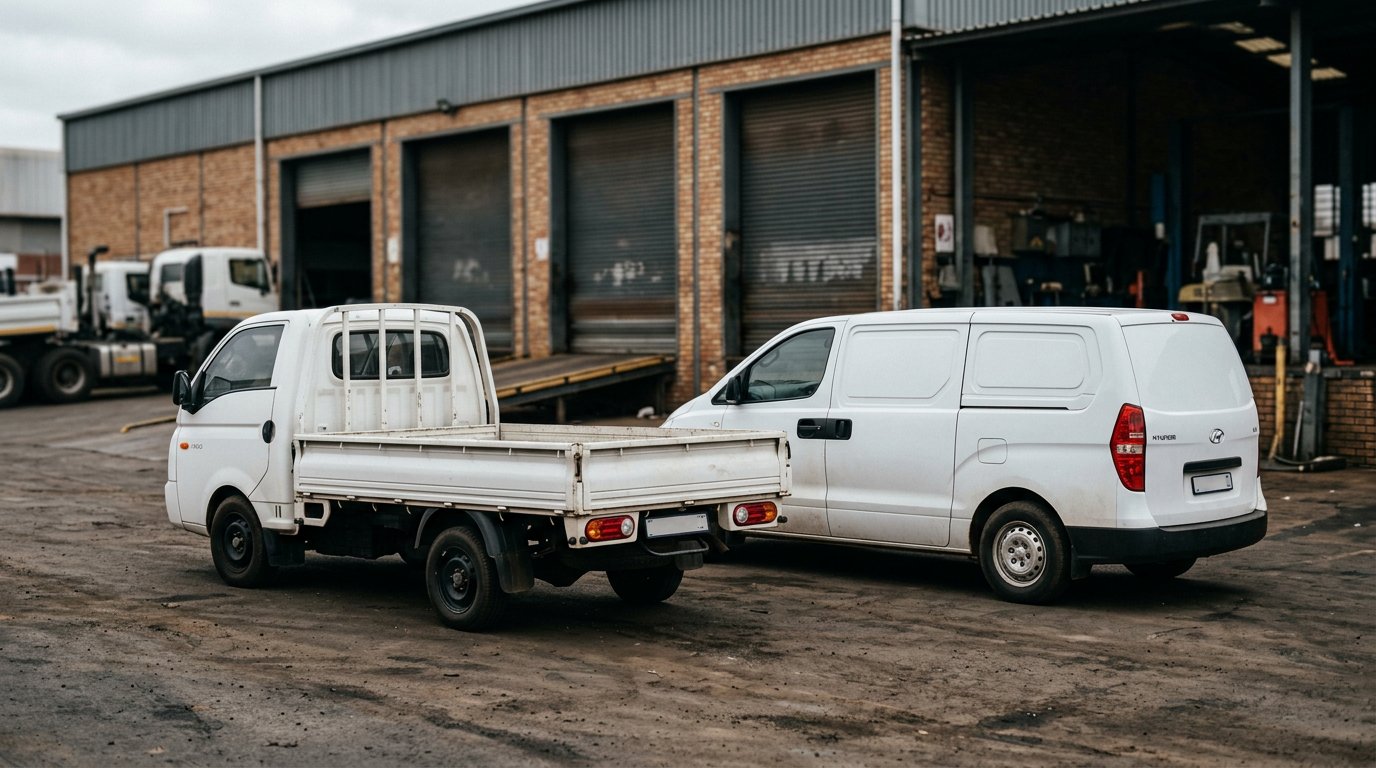
If you own an H-100, your bakkie has no turbo
Worth clearing up, because the two get lumped together — and the answer depends on the year the bakkie was built.
Since the May 2012 facelift, the H-100 has had no turbo at all. Reporting that change when it happened, IOL Motoring wrote that Hyundai had "replaced the previous 69kW/220Nm 2.5-litre turbodiesel engine with a naturally aspirated diesel engine. This 2.6-litre engine produces just 58kW at 3800rpm and 167Nm at 2200rpm." Hyundai South Africa's own showroom listing still describes the current H-100 Deck as "powered by a 2.6-litre diesel engine with 58 kW and 167 Nm, paired to a 5-speed manual gearbox", and Hyundai's own H-100 brochure prints the rest of the table: 2.6 D Euro II, a compression ratio of 22:1, a single overhead camshaft with two valves per cylinder, and a fuel system listed as a "min-max type governor, Bosch type injection pump" — a mechanical pump, not common rail. No turbocharger or intercooler row appears anywhere in that specification.
A pre-facelift H-100 is a different story. Those ran a 2.5-litre turbodiesel making 69 kW and 220 Nm — a simpler, lower-output engine than the H-1's 2.5 common-rail unit, but a turbocharged one, so an older H-100 can absolutely have a turbo fault. Check the build year before you rule it in or out. If you are weighing up the two as workhorses, we compared them directly in our guide to choosing between the H100 and the H1 for a delivery business.
The Four Symptoms Worth Acting On
Blue smoke from the exhaust. This is the classic one. As the turbo's bearing clearances open up, oil escapes past the seals into the exhaust or the intake and gets burned. Garrett describes the end of that process plainly: it "is usually accompanied by a sharp increase in noise level and oil leaking past the turbine end seal causing oil to be burned and in vehicles without a particulate filter, noticeable exhaust smoke". But do not read blue smoke as a condemned turbo on this engine. The same smoke reaches the exhaust by a second route that has nothing to do with the turbo's seals: oil pushed out of a pressurised crankcase through the breather, into the intercooler pipework and back through the intake. One iLoad owner describes that end of it plainly — "my intercooler ruptured and started sucking oil back through it and sprayed onto the engine". Before condemning a turbo on smoke alone, have the crankcase breather and the intercooler pipework checked, and have the intake pulled to see where the oil is actually coming from.
A whistle or siren that rises with engine speed. Note that Garrett pairs the smoke with "a sharp increase in noise level" — the noise and the smoke are two symptoms of the same worn bearing, and they usually arrive together. A turbo has always made some noise; what matters is a new, louder, higher note that tracks engine revs.
A sudden loss of boost, a flat throttle or limp mode. On a variable-geometry turbo this is often not wear at all. The vanes are a moving mechanism sitting in the exhaust stream, and carbon deposits can stiffen them until they no longer swing freely — which shows up as lost boost rather than as noise or smoke. The good news is that a stuck mechanism is frequently cleanable; the bad news is that it usually means something upstream is running dirty. Before condemning anything, note that the vanes are driven by an actuator and its vacuum plumbing, and a perished hose or a tired actuator produces the same flat van as a seized turbo at a fraction of the cost.
A metallic rattle or grinding. Rattling from the turbo is the sound of a shaft that the oil film is no longer controlling. This is the one to stop driving for. A turbine wheel that lets go sends metal downstream, and what starts as a turbo bill becomes an engine bill.
Why Turbos Fail: the Three Turbo Killers
Garrett's summary is the most useful sentence in this whole subject: "Most failures are caused by the three 'turbo killers' of oil starvation, oil contamination and foreign object damage."
Oil starvation is the turbo not getting oil fast enough. Garrett names the usual culprits — "blocked or leaking pipes or lack of priming on fitting". That last phrase is the one that catches people out: a new turbo that is bolted on and started without being primed with oil first can be damaged in seconds.
Oil contamination is the slower killer, and the one that punishes skipped services. Garrett's description is worth reading twice: the most common contaminants "are fine particles; usually carbon from the combustion process and if the concentration of these particles becomes too high, it acts a very effective abrasive, gradually eroding and polishing the running surfaces of the bearing and shaft, increasing the clearances and closing the oil feed holes, until the oil is no longer able to control the shaft". Dirty oil does not just fail to lubricate — it actively grinds the bearing away and then blocks the holes that feed it.
Foreign object damage is anything hard reaching the wheels. BorgWarner lists it first: "penetration of foreign bodies into the turbine or the compressor". A perished intake hose or an air filter that has been left in far too long is all it takes.
The Failure Chain Specific to This Engine
On the H-1 and its iLoad and iMax siblings there is one chain that owners and independent workshops describe over and over, and it explains why so many of these vans eat a second turbo shortly after the first.
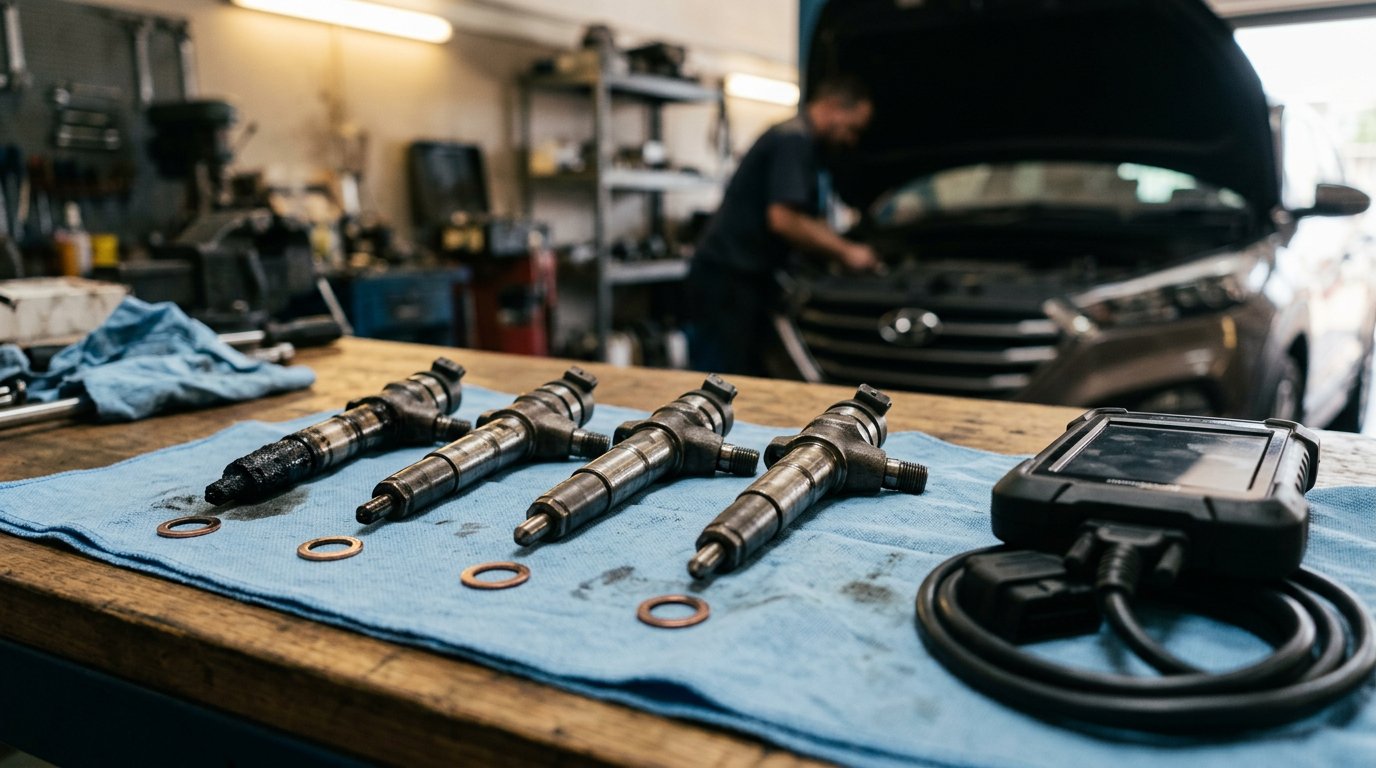
Copper washers under the injectors start to leak. Combustion gas and soot get past them into the engine oil, which turns black and sludgy far sooner than any service interval assumes. That sludge blocks the oil pick-up screen in the sump. And the turbo — the component that depends on oil flow most, largely for cooling — is the first thing to starve. It dies first but it is last in the chain.
Long-term owners describe both ends of that chain. On the injector side, one warns that "you must stress this to your mechanic the diesel injectors need servicing every 40,000 kms as they have two washers (similar to o rings) that can come lose and then this allows carbon to build up on them". Another recommends "changing the fuel injector copper seals with an oil change... otherwise the seals will eventually corrode". On the oil side, a high-mileage owner keeps ahead of it deliberately: "I regularly have my mechanic clean out the 'oil pickup screen'. This ensures the turbo is fed cooling oil." His one-line summary of why is the whole argument of this article — oil starvation kills turbo bearings through heat.
The practical consequence is blunt. If you are fitting a turbo to one of these vans, drop the sump and inspect the oil pick-up, and check the injector washers while you are in there. A turbo bolted onto an engine still circulating sooty oil is a turbo you will buy twice. The same applies to the turbo's own oil feed and drain lines — any restriction there starves the new unit exactly as the old one was starved.
The Cheaper Faults That Imitate a Dying Turbo
This is where money gets wasted, and Garrett says it better than we can: "a lack of power, noisy performance or excessive smoke or oil consumption could result from a faulty fuel injection system, restricted or blocked air filters, a damaged exhaust system or a lubrication problem."
Read that list again before you authorise a turbo. Every symptom in this post can be produced by something cheaper:
- A blocked or collapsing air filter starves the compressor and costs power. Filters are the cheapest thing on the van — browse filters and maintenance parts and change them on schedule.
- Worn injectors on a 2.5 CRDi produce smoke, rough running and poor power, and they are frequently mistaken for turbo trouble. The symptoms and the test sequence are different, and we set them out in our guide to CRDi injector failure.
- A split intercooler pipe or perished boost hose loses boost pressure on its way to the engine. The turbo is working perfectly; the air is escaping.
- A damaged or restricted exhaust raises back pressure, and high exhaust temperatures are one of BorgWarner's four named causes of turbo failure in the first place.
Diesel faults on these engines also tend to travel in groups rather than alone. The same pattern shows up on Hyundai's larger CRDi — our write-up of common Santa Fe 2.2 CRDi problems covers a turbo actuator fault alongside three others that share symptoms with it.
What to Check Before Condemning a Turbo
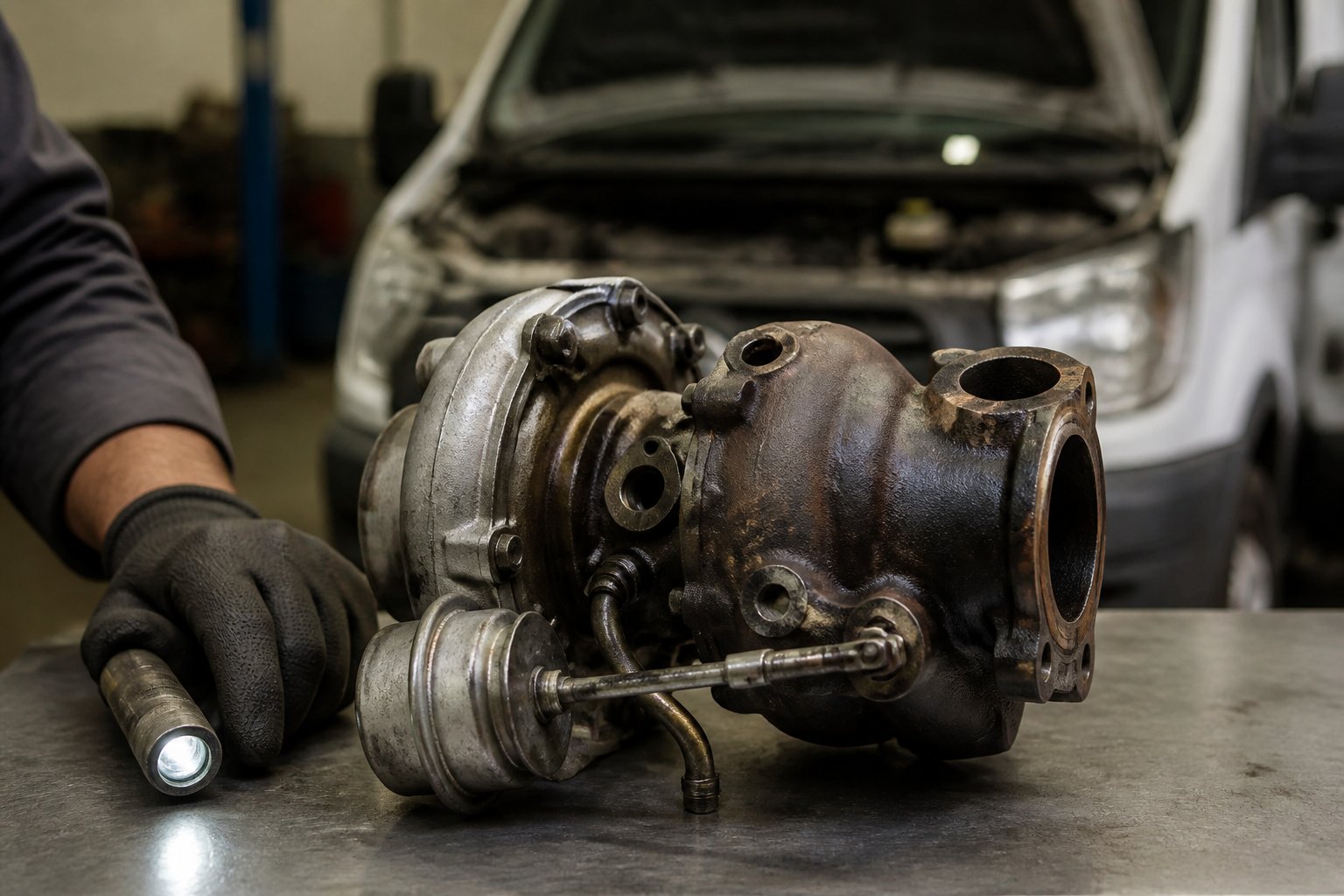
When an H-1 shows these symptoms, the checks a workshop should run are cheap, and they work best in this order. Pull the intake pipe off the compressor inlet and look for oil pooling in it. Spin the compressor wheel by hand and feel for axial and radial shaft play, and look for tip damage on the blades. Check the oil feed pipe is clear rather than assuming it is. Look at the vane actuator linkage and see whether it moves freely or is gummed solid with carbon. Then, and only then, form a view on the turbo.
Two findings condemn the turbo outright. Play in the shaft is one. The other is a missing compressor wheel nut, which Delphi calls "a clear indication of main shaft seizure".
Apply the same scrutiny to the oil itself, because that is where the odds say the fault started. If the service history has gaps, if the oil is overdue, or if the filter is the original one, you have found your cause before you have touched the turbo.
Driving Habits That Shorten Turbo Life
Garrett is specific about the habits that kill turbos, and H-1s live the kind of life that encourages all of them:
- Hot shutdown. "Hot engine shutdown can cause carbon build-up in the turbo, leading to bearing failure." Pulling up after a loaded run and switching off immediately leaves the turbo full of oil with no flow to carry the heat away, and that oil bakes. Give it a minute at idle.
- Hard acceleration from cold. This "will not give the oil time to circulate, causing oil starvation to the turbo and engine bearings".
- Prolonged idling. Garrett notes that it "can create a vacuum with the turbine" — so sitting idling for long stretches is not the harmless option it feels like.
- Over-revving. Particularly in commercial vehicles, Garrett warns, "revving the engine beyond its safe limit can cause the turbo to overspeed and over boost the engine... and to suffer oil starvation".
None of this needs a workshop. Oil on grade and on time, filters changed, a minute of idle before shutdown — that is most of a turbo's life expectancy right there.
Repair, Recondition or Replace
If the vane mechanism is gummed but the shaft is tight, cleaning and freeing the linkage can bring the turbo back, and it is always worth checking before you spend. If there is shaft play, the core is finished and no amount of cleaning helps.
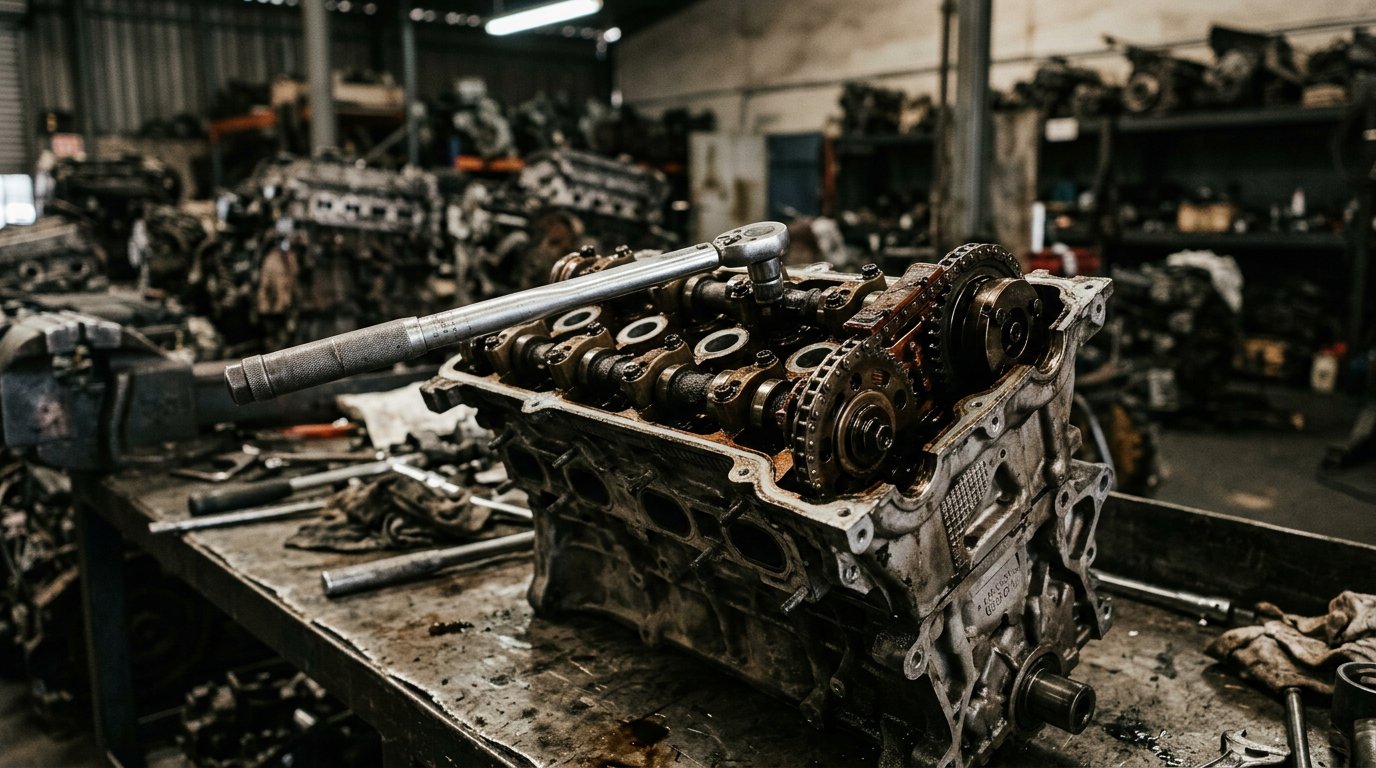
From there you have two routes. A reconditioned core replaces the shaft, bearings and seals inside the centre housing while keeping your original cast housings — usually the better buy when those housings are sound, which on a well-kept van they generally are. A used unit makes more sense when a housing is cracked or a mounting flange is damaged. For both, see our Hyundai turbochargers for sale page and ask for a quote.
One caution on the used route: a used turbo pulled from the same engine family can arrive with the same carbon-fouled vane mechanism you are trying to escape. Ask what was checked before you buy.
Where to Get H-1 Turbo Parts
We supply turbochargers, oil feed and return pipes, intercooler pipework, filters and engine parts for the H-1, delivered nationwide from Lenasia South. Start at our Hyundai H-1 spares page, or see the H100 parts page if it is the 2.6 bakkie you are running.
If the turbo took the engine with it — metal downstream, low compression, knocking on start-up — a used long block is often the economical answer rather than a rebuild. See our Hyundai engines for sale page. Send us your model year, VIN and the part you need and we will quote you.
Sources
- Garrett Motion — Why do turbochargers fail? (oil starvation, oil contamination, foreign object damage, driving habits) (https://www.garrettmotion.com/knowledge-center-category/turbo-replacement/why-do-turbochargers-fail/)
- BorgWarner — Troubleshooting for turbochargers (the four causes behind 90% of failures) (https://www.borgwarner.com/aftermarket/boosting-technologies/troubleshooting)
- cars.co.za — Hyundai H1 (2018) Specs and Price (2.5 VGTi 125 kW / 441 Nm, 2.4 petrol 126 kW / 224 Nm) (https://www.cars.co.za/motoring-news/hyundai-h1-2018-specs-and-price/38963/)
- CAR Magazine — DRIVEN: Hyundai H-1 Wagon 2,5 VGTi (125 kW / 441 N.m) (https://www.carmag.co.za/car-reviews/driving-impressions/driven-hyundai-h-1-wagon-25-vgti/)
- cars.co.za — Hyundai Staria (2021) Launch Review (the Staria officially replaces the H1) (https://www.cars.co.za/motoring-news/hyundai-staria-2021-launch-review/107966/)
- Hyundai South Africa — H-100 Deck showroom listing (2.6-litre, 58 kW, 167 Nm, Euro II) (https://www.hyundai.co.za/new-vehicles/showroom/h-100-deck)
- Hyundai South Africa — H-100 digital brochure, engine specification table (2.6 D Euro II, 22:1 compression, SOHC 2 valves per cylinder, Bosch-type injection pump with min-max governor) (https://www.hyundai.co.za/new-vehicles/showroom/h-100-deck)
- IOL Motoring, 23 May 2012 — Upgraded Hyundai bakkie has less poke (the May 2012 switch from the 69 kW / 220 Nm 2.5 turbodiesel to the naturally aspirated 2.6) (https://www.iol.co.za/motoring/cars/upgraded-hyundai-bakkie-has-less-poke-1302803)
- Delphi (PHINIA) — Turbocharger failure modes: oil starvation (missing compressor wheel nut as an indication of main shaft seizure) (https://www.delphiautoparts.com/resource-center/article/turbocharger-failure-modes-oil-starvation)
- ProductReview.com.au — Hyundai iLoad owner reviews (injector copper washers, oil pick-up screen cleaning, intercooler oil) (https://www.productreview.com.au/listings/hyundai-iload)