
Quick answer: if you are moving palletised stock, builders rubble or anything that needs a tail-lift on an open load bed, the Hyundai H100 dropside bakkie is the right call — it is cheaper to buy used, cheaper to service, and Hyundai South Africa rates the current Deck at a 1 335 kg payload. If you need a secured, weather-tight load space for couriers, electronics, alcohol delivery, or anything thieves like, the Hyundai H1 / iLoad panel van wins on practicality despite the higher running cost.
Key Takeaways
- H100 is a workhorse light commercial bakkie — open load body, leaf-spring rear, diesel only
- H1 (iLoad / iMax / Grand Starex) is a forward-control van — enclosed cargo, coil rear, 2.4 petrol or 2.5 CRDi
- Used H100 prices in SA: R140k-R260k depending on year and condition (2026 values)
- Used H1 panel van prices: R180k-R380k for tradesman-spec units
- H100 wins on simplicity, payload-per-rand, and parts price
- H1 wins on cargo security, NVH, and dual-purpose use (cargo + people carrier swap)
What These Vans Actually Are
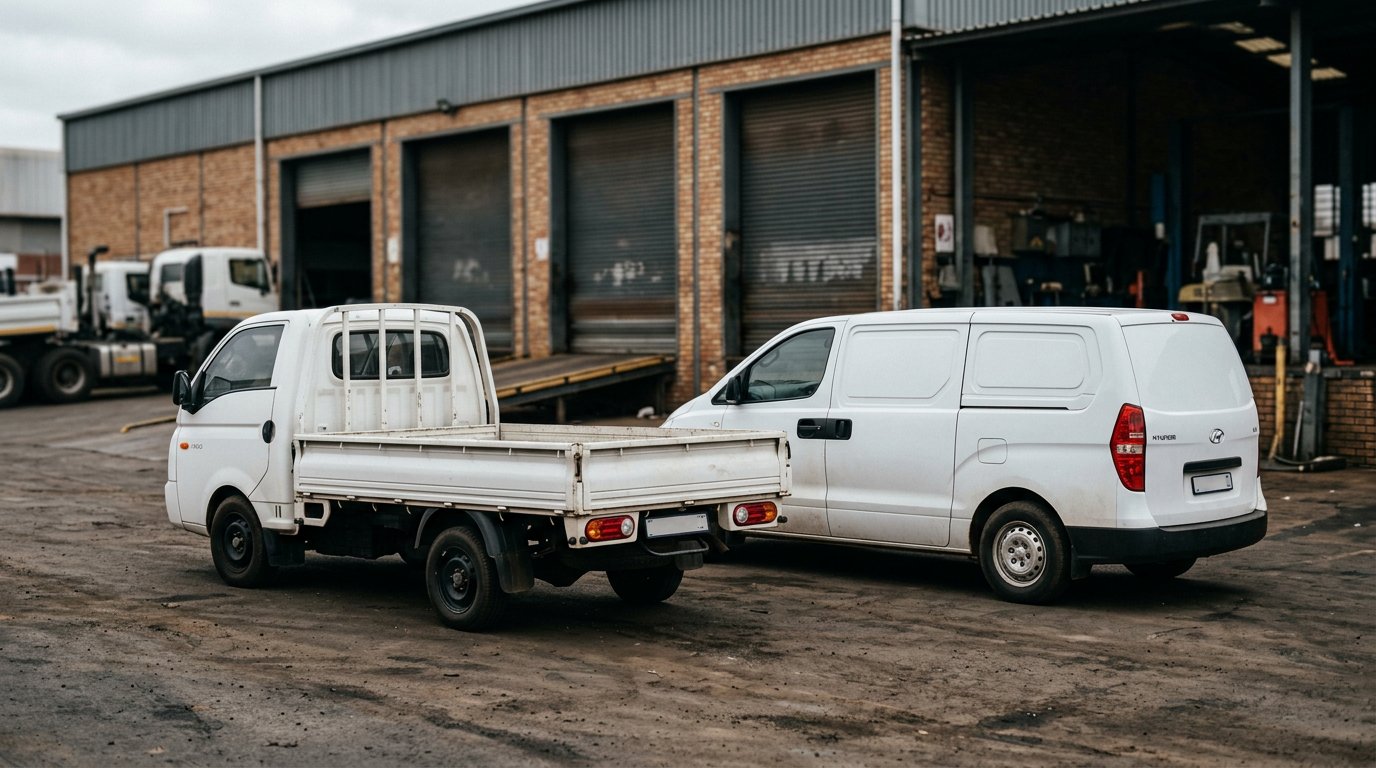
The Hyundai H100 sold in SA is the Porter II (HR-series) — a forward-control 1-tonne light commercial with a leaf-sprung live rear axle, and a diesel engine: Hyundai South Africa lists the current H-100 Deck with a 2.6-litre diesel making 58 kW and 167 Nm, a 5-speed manual and a payload of 1 335 kg. Older H100s used different engines, so check the build year. It is basic, durable and repairable.
The Hyundai H1 (sold globally as iLoad for the panel van, iMax for the people-carrier, and Grand Starex in some markets) is a much more modern unitary-construction van/MPV. The TQ-generation (2007-2024 in SA) uses a transverse front-engine layout with a D4CB 2.5 CRDi diesel (140-170 hp depending on year) or G4KG 2.4 Theta petrol. Coil-sprung rear, 5-speed automatic or manual, much more car-like to drive.
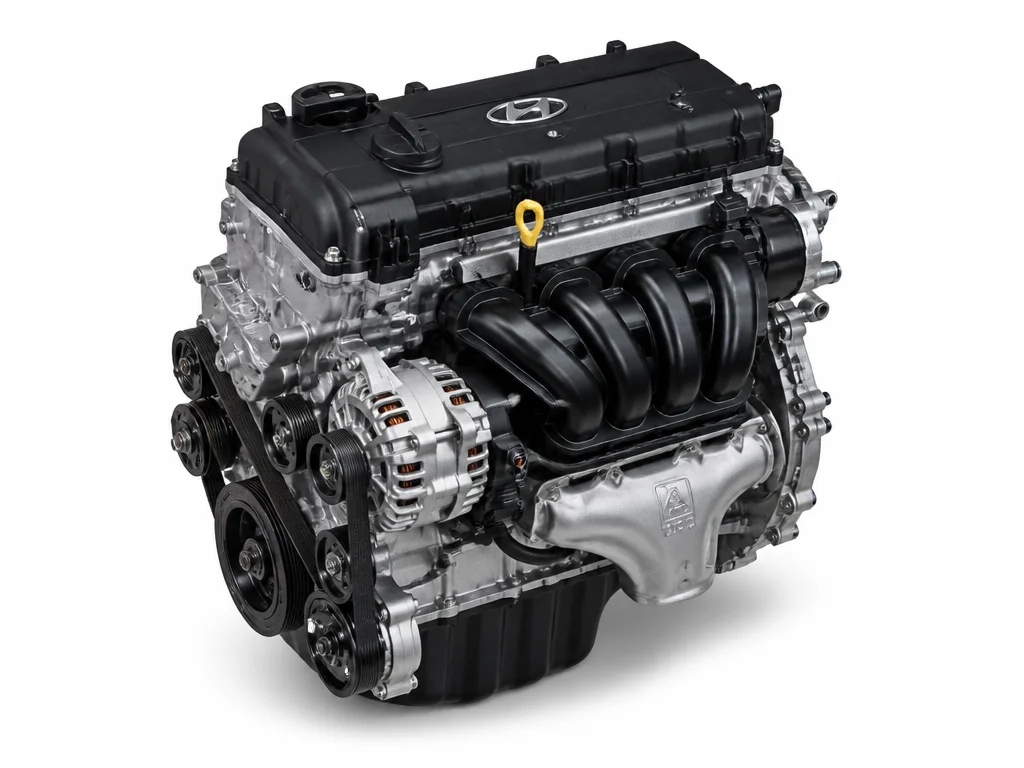
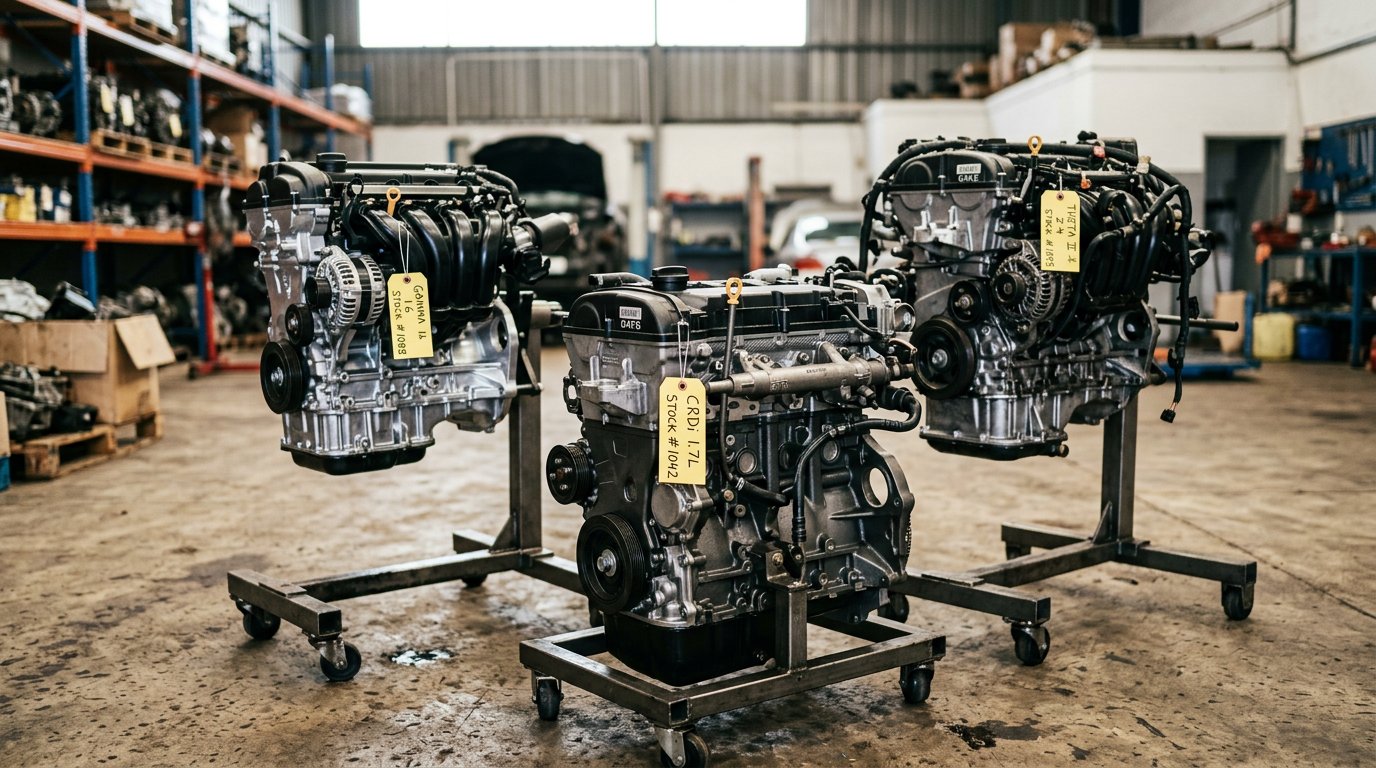
D4BB & D4CB Diesel Engines
The 2.6 naturally aspirated diesel powers post-2012 H100s. The D4CB 2.5 CRDi powers the H1 diesel — common-rail, turbocharged, more power but injector-sensitive.
Spec Sheet Head-to-Head
| Spec | H100 Bakkie (Porter II) | H1 iLoad Panel Van (TQ) |
|---|---|---|
| Engine (current SA) | D4BB 2.6 NA Diesel | D4CB 2.5 CRDi |
| Power | 58 kW | 125-130 kW |
| Torque | 167 Nm | 392-441 Nm |
| Payload | 1 335 kg (current Deck) | 870-1 050 kg |
| Load space | Open dropside, 2.4 x 1.6 m | 4.4 m³ enclosed |
| Used price range (2026) | R140 000 - R260 000 | R180 000 - R380 000 |
| Service cost / year | R3 500 - R6 000 | R6 000 - R10 000 |
| Fuel economy (real-world) | 8.5 - 10 L/100km | 9 - 11 L/100km diesel |
| Transmission options | 5-speed manual only | 5MT or 5AT |
| Turning circle | 11.0 m | 11.2 m |
Prices, running costs and fuel figures are indicative ranges only, not quotes; they vary by year, condition, mileage, supplier and labour rate. Confirm the specification of a specific vehicle against its own documentation.
When To Buy An H100
The H100 is the right answer when:
- You move bulky / open / awkward loads — building materials, scrap metal, agricultural feed, garden refuse
- Cost matters more than comfort — your driver does 8 hours a day at 80 km/h on rural roads
- You need maximum payload — Hyundai SA rates the current Deck at 1 335 kg
- Repair cost matters — the D4BB engine is a generation behind common-rail tech, no electronic injectors, no DPF, no AdBlue
- You can fit a canopy / tonneau later if you eventually want enclosed cargo
The H100's weak spots are NVH (it is noisy on the highway), the dated cabin, and the absence of safety kit by modern standards. ABS only became standard mid-life; airbags are basic; no traction control.
When To Buy An H1 / iLoad
The H1 is the right answer when:
- You carry valuable / weather-sensitive cargo — couriers, alcohol delivery, mobile workshops, electronics
- You need to swap between cargo (panel van) and passengers (people carrier) — the iMax conversion is cheap
- Driver comfort is part of retention — the H1 cabin is car-like, with cruise, aircon, and a proper auto box
- You run a longer-route operation — the CRDi engine cruises at 120 km/h all day and the coil-sprung rear is far easier on the lower back
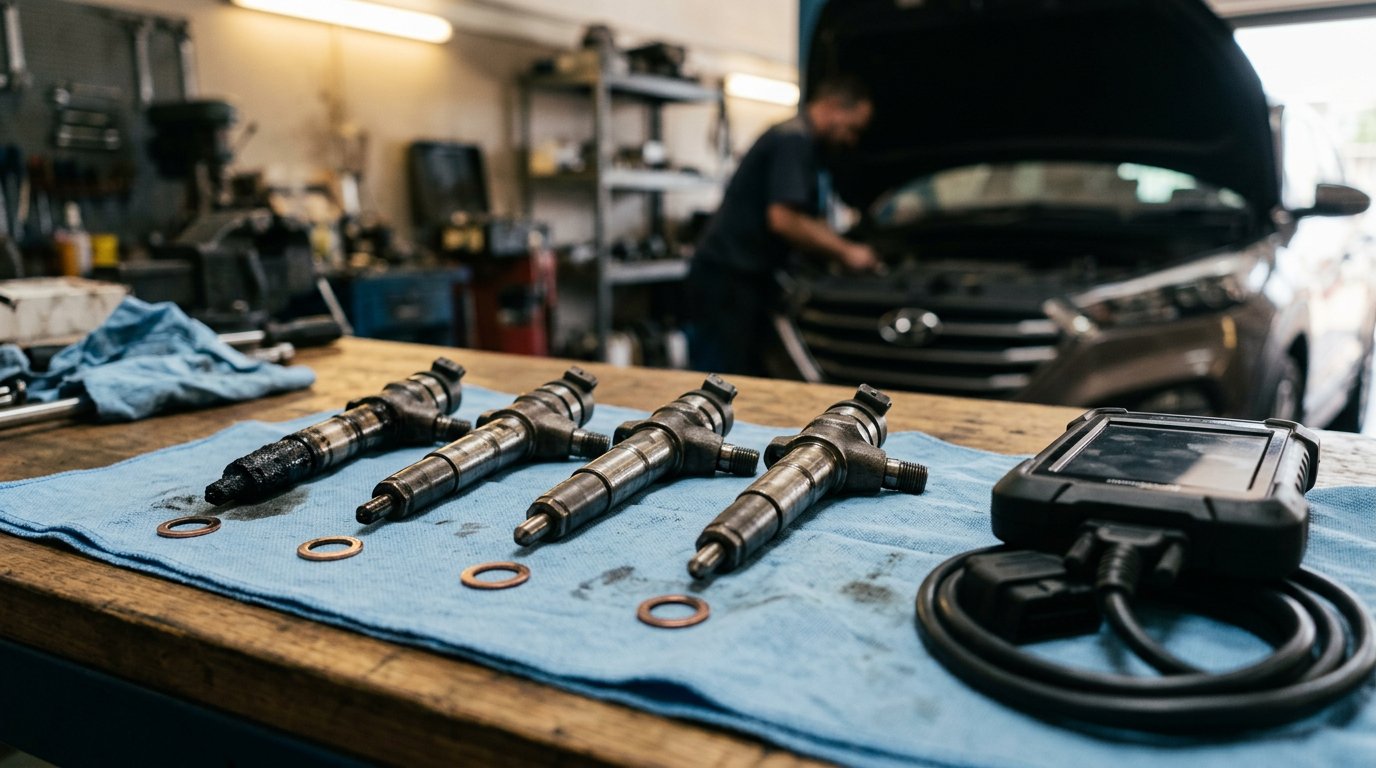
H1 weak spots: D4CB CRDi injector failures are the headline reliability issue (see our CRDi injector failure symptoms guide), and the DPF on later units gets blocked if the van does short stop-start work without highway clearing runs.
Running Cost Reality Check For A Small Business
The H1 costs more to keep running: its common-rail CRDi engine, injectors and (on later units) DPF are more expensive to maintain than the H100's simpler mechanical diesel. Against that, the H1 tends to hold more value at resale. For many operators the H1 is the better business decision because:
- Cargo loss to weather and theft on an H100 (especially without a canopy) cuts into margin
- Driver fatigue on H1 is markedly lower over long shifts
- The H1 doubles as a passenger vehicle when needed (eg. office-to-airport runs)
That changes the moment your work involves anything dirty, heavy, or oversized — at which point the H100's open load body becomes priceless.
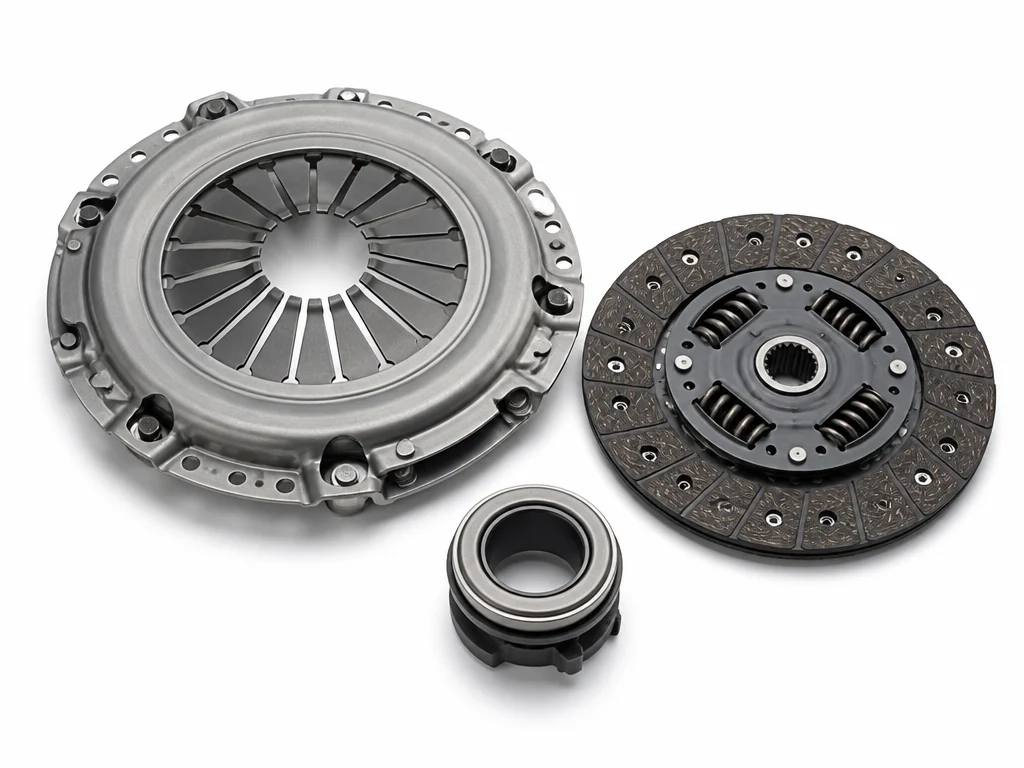
H100 & H1 Clutch Kits
A loaded H100 or H1 is hard on clutches. Ask us for a quote on a clutch kit (cover, plate, release bearing) for either van, delivered nationwide for your own workshop to fit.
What To Check When You Inspect A Used Unit
For an H100:
- Leaf spring condition — sag and cracks are common after years of overload
- Diff oil colour — silver flakes mean axle bearings are going
- Fuel pump priming bulb (D4BB) — if it stays soft, the lift pump is dying
- Cab corner rust on the door pillars, especially on coastal-province units
For an H1:
- Listen for injector chatter at idle — a click-click that goes away at 1500 rpm is a common D4CB injector tell
- Check the DPF restriction warning history on a scan tool — multiple regen failures point to a future blockage
- Sliding door rollers and tracks — they get sticky after 200 000 km
- Aux belt tensioner — failed tensioners eat alternators
Final Verdict
For a furniture removal, pest control, plumbing or building business — buy the H100. The lower running cost compounds and the dropside body is worth its weight in gold for off-loading.
For couriers, e-commerce last-mile delivery, mobile services and anything secured and weatherproof — buy the H1 / iLoad. The cargo security plus driver comfort win on total cost of ownership.
Get a used H100 parts quote or a used H1 parts quote from us in Lenasia South, with delivery nationwide. If the D4CB or D4BB engine needs replacing, see our Hyundai engines for sale page and ask for a quote.
Sources
- Hyundai South Africa — H-100 Deck showroom listing (2.6-litre diesel, 58 kW, 167 Nm, 1 335 kg payload) (https://www.hyundai.co.za/new-vehicles/showroom/h-100-deck)